A fine line tattoo is drawn with the smallest needle an artist owns, sometimes a single point. The line it leaves can be thinner than a pencil stroke. That is the whole appeal, and it is also the whole risk.
A bold traditional line carries enough ink to forgive a great deal. A hair-thin line forgives nothing. Every dry patch of skin, every scab pulled early and every summer without protection shows. This guide explains what fine line work is, how it really ages and what you can do before and after the appointment to give delicate work the longest possible life.
The styleWhat is a fine line tattoo?
Fine line is a way of tattooing, not a subject. The artist works with a single needle or a very small group of needles, usually in black or grey, and builds the image from thin, even lines with little or no heavy shading. Botanicals, script, small symbols, architectural drawings and micro realism are all common. The style grew out of the black and grey single needle work of East Los Angeles in the 1970s and is now one of the most requested in the world.
It is one of the 84 styles in our guide to tattoo styles, and some of the most admired pieces in the Hall of Fame are built on it.
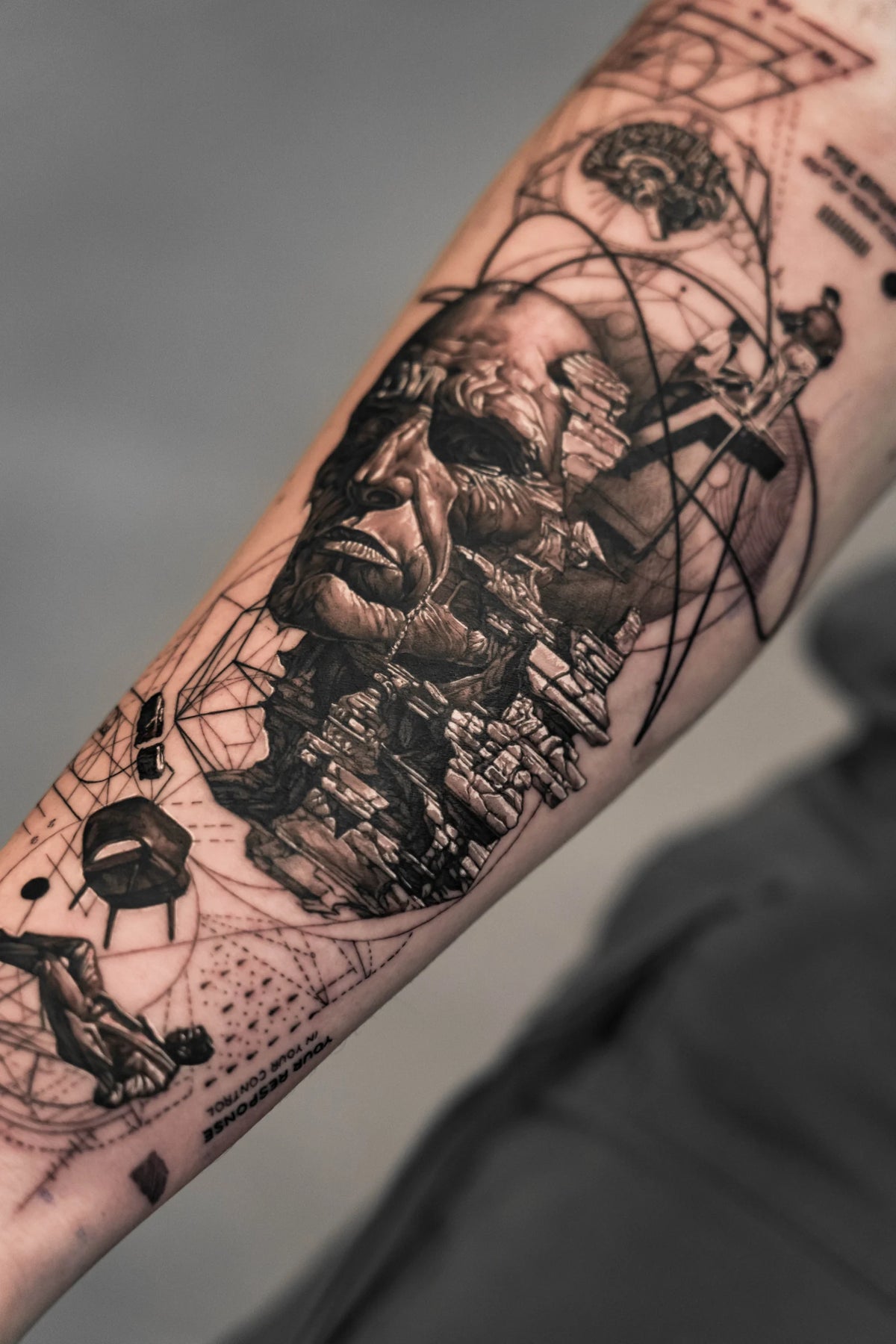
The craftWhy fine line is the least forgiving style
Tattoo ink has to sit in the dermis, the stable layer of skin beneath the surface. The target is narrow. Too shallow and the ink sheds as the surface renews, leaving a line that looks faded or broken within weeks. Too deep and the ink spreads sideways into the softer tissue below. Artists call that a blowout, and it shows as a soft shadow around the line.
With a thick line, a small error in depth is hidden inside the line itself. With a single needle there is nowhere to hide. That is why the best fine line artists are specialists, why they book out months ahead and why they care so much about the skin you bring them.
| What matters | Fine line | Bold line |
|---|---|---|
| Needle | A single needle or a very small group | Larger groups of needles |
| Ink in the line | Very little | A great deal |
| Margin for error | Almost none | Generous |
| How age shows | Sooner, as softening or fading | Later, as gradual thickening |
| Touch ups | More likely over the years | Less likely |
The yearsDo fine line tattoos fade?
All tattoos change. Over the years the body slowly carries some pigment away, and the rest settles and spreads a little in the skin. On a bold tattoo that reads as character. On a fine line tattoo the same change is easier to see, because there was less ink to begin with. Lines can soften, lighten or lose their crispness, and very small details placed close together can merge.
How fast that happens depends on 4 things. The skill of the artist. The placement, since hands, fingers, feet and anywhere that rubs or sees a lot of sun will age faster. The size of the design, because detail needs room. And the condition of the skin, before the appointment and in every year after it.
A well made fine line tattoo on healthy, protected skin can stay elegant for many years. Some pieces will want a touch up along the way, and a good artist will tell you so at the consultation. There is more on the causes in why tattoos fade.
The canvasWhy preparation matters more for fine line
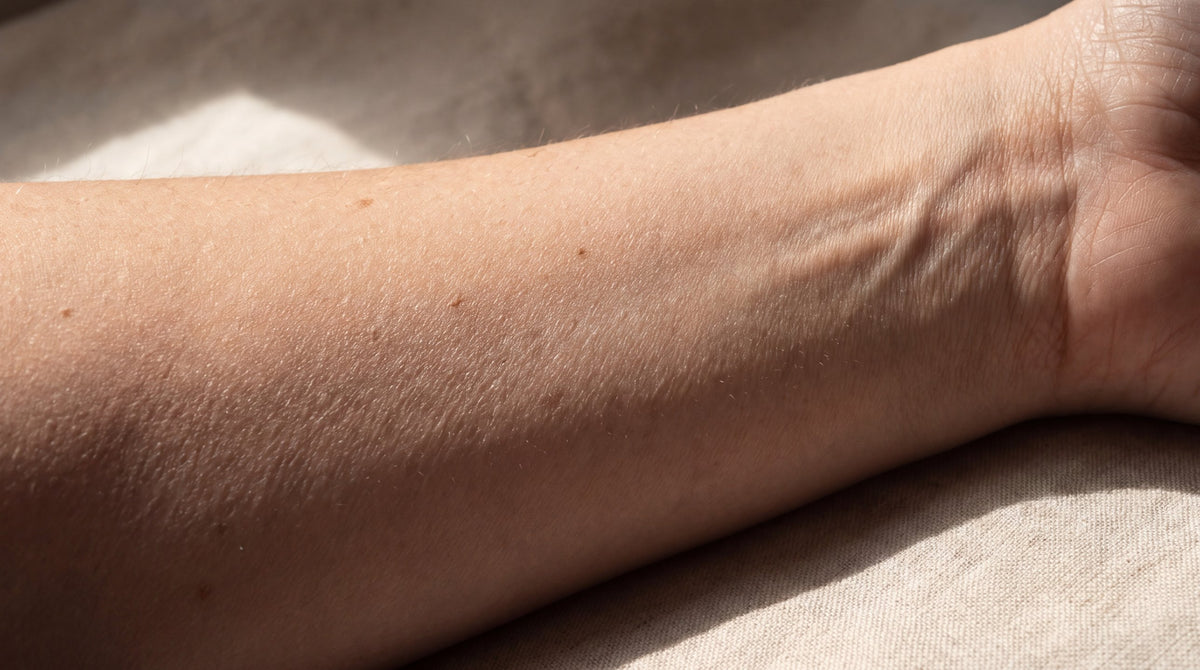
Ask any artist who works at this scale what makes a session difficult and the answer is rarely the design. It is the skin. Dry, flaking, sunburnt or irritated skin does not take a fine needle evenly. The artist has to work harder for the same line, and delicate work has no tolerance for that.
Skin that is hydrated, calm and intact gives the needle a smooth, predictable surface. You cannot change your skin the night before. You can change it over the 3 weeks before.
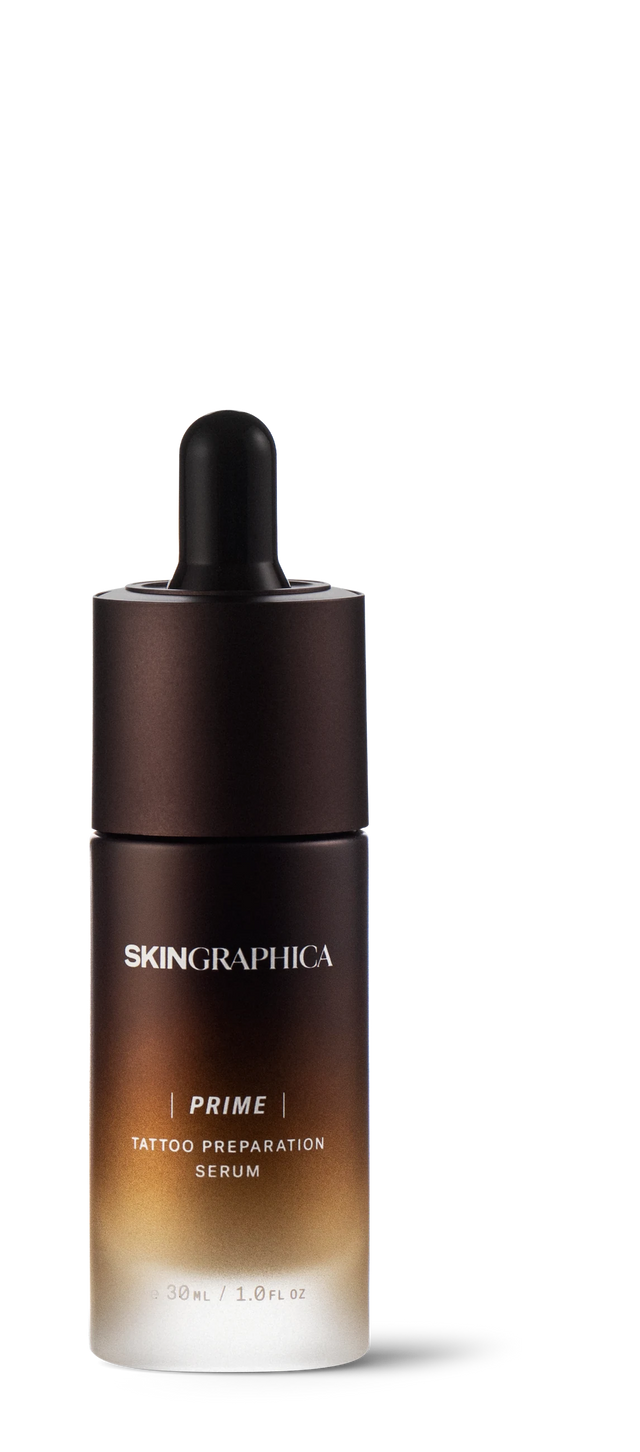
PRIME is our preparation serum, formulated for exactly this window. It is used twice a day for the 21 days leading up to the appointment, so the skin arrives hydrated, settled and ready. For the most precise work in tattooing, it is the least you can do for the person holding the needle.
- Start 21 days out. PRIME morning and night on the area to be tattooed.
- Stay out of the sun. No artist can work on sunburnt or peeling skin.
- Leave the surface alone in the final week. No exfoliation on the area.
- Look after the basics. Water, sleep and a proper meal, and no alcohol the night before.
- Tell your artist about your skin. Dryness, irritation or a recent breakout can change the plan.
The full checklist is in preparing for your first tattoo.
The first 14 daysFine line tattoo recovery
A fine line tattoo usually looks settled on the surface within about 2 weeks, and the skin beneath keeps settling for several weeks after that. Because the line is so thin, small things in those first days matter more. A scab pulled early can take a section of line with it. Skin left to dry out and crack can do the same.
- Follow your artist first. They know the work and the skin it is in.
- Keep it clean. Wash gently, with clean hands.
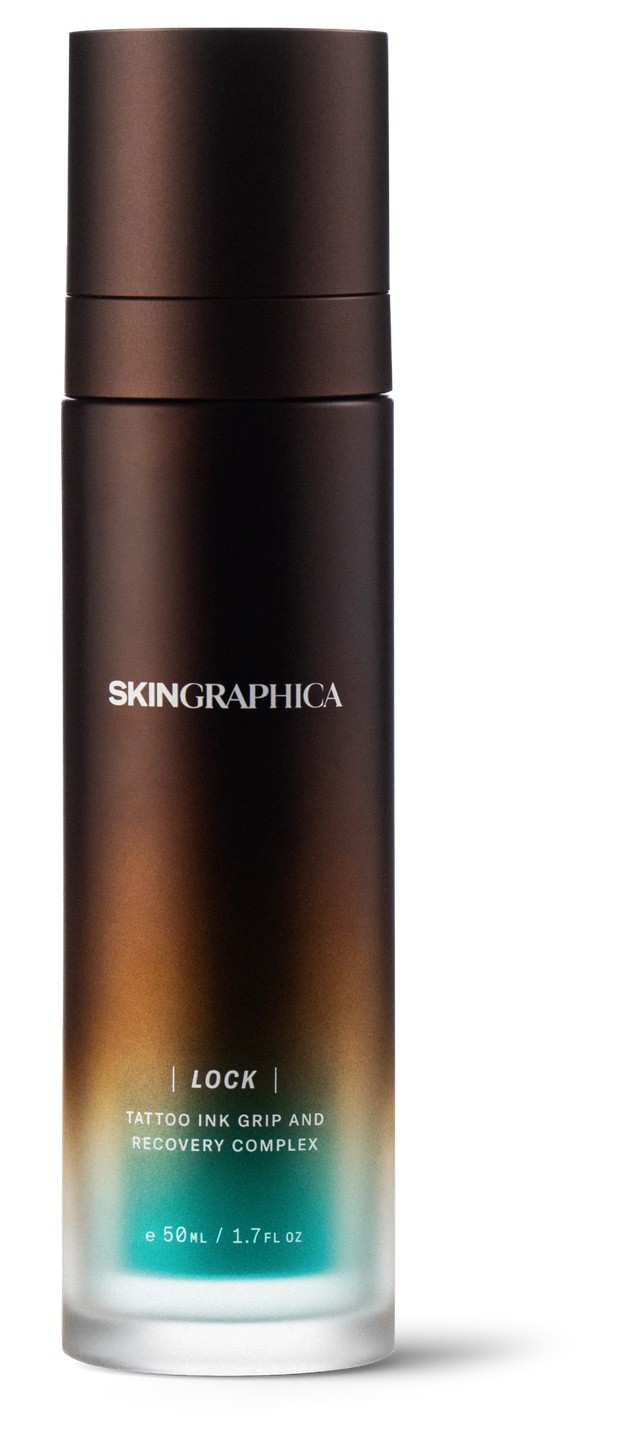
- Keep it lightly moisturised, never smothered. LOCK is made for the first 14 days of recovery.
- Do not pick, scratch or peel. Let every flake fall on its own.
- No swimming, soaking or direct sun until the surface has fully recovered.
For the detail, read the first 48 hours and peeling and itching.
Every year afterHow to keep fine lines sharp
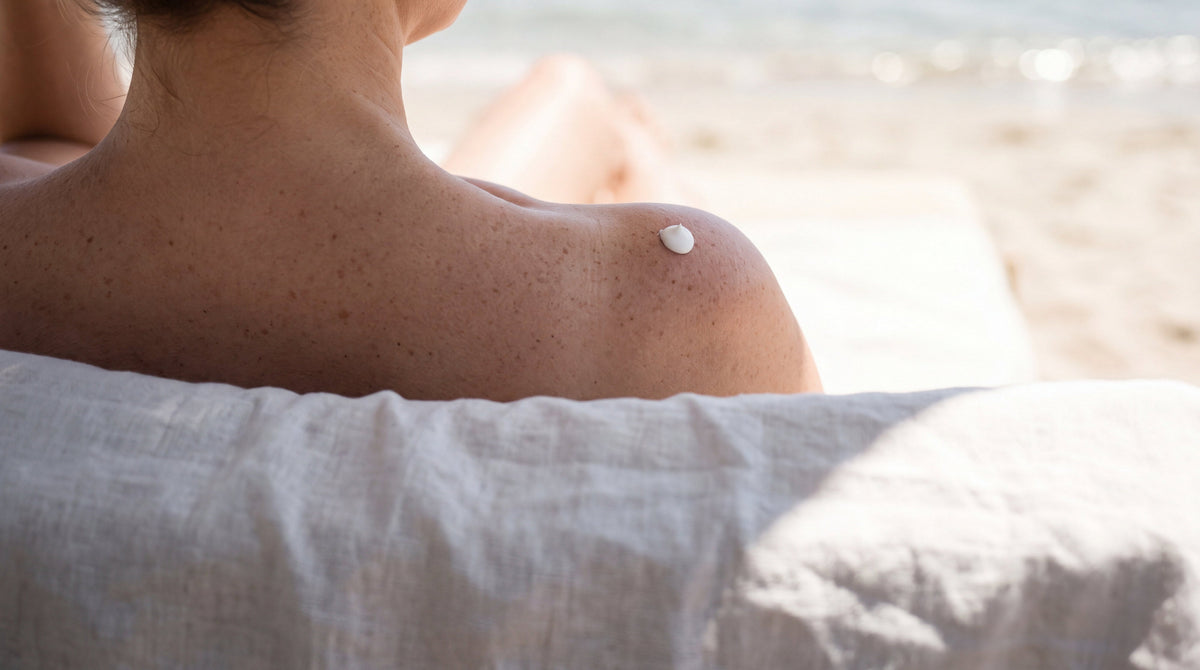
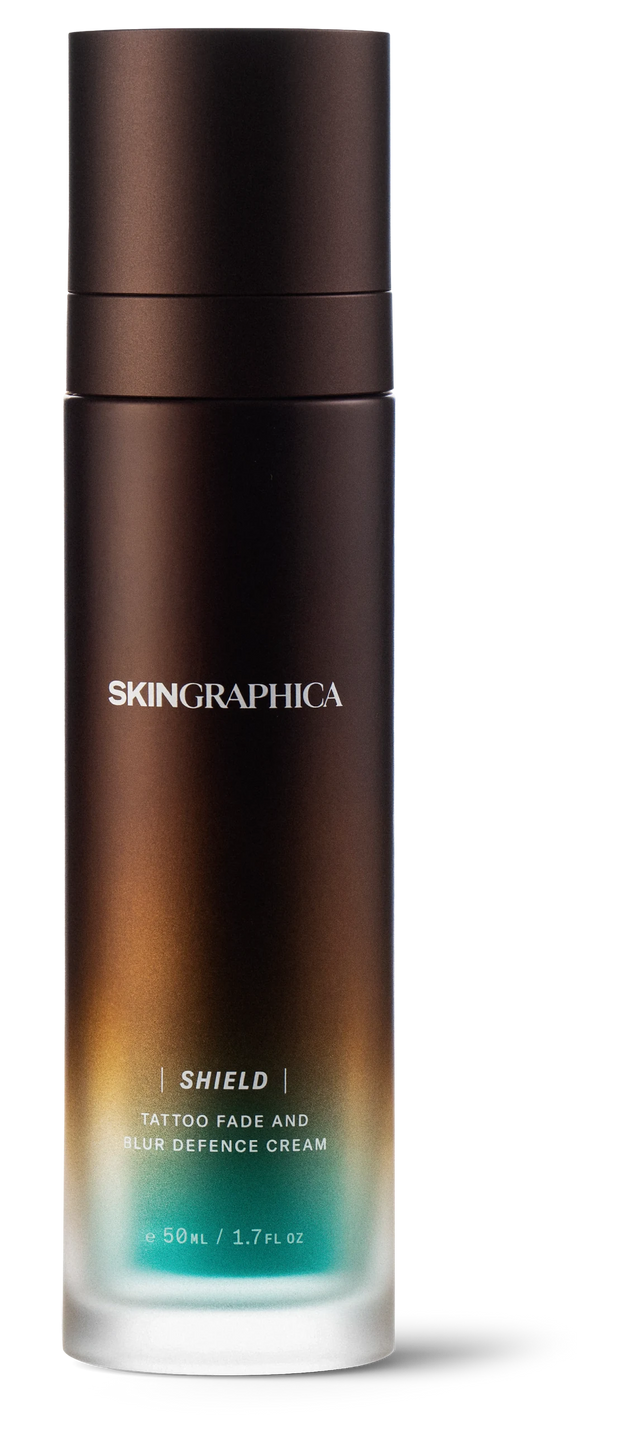
Sunlight is the main reason tattoos lose definition, and thin lines show it first. Daily protection matters more for fine line than for any other style. SHIELD is our daily protection for tattooed skin. Use it every day the tattoo sees daylight, and add shade, clothing or a dedicated sunscreen for long days outdoors.
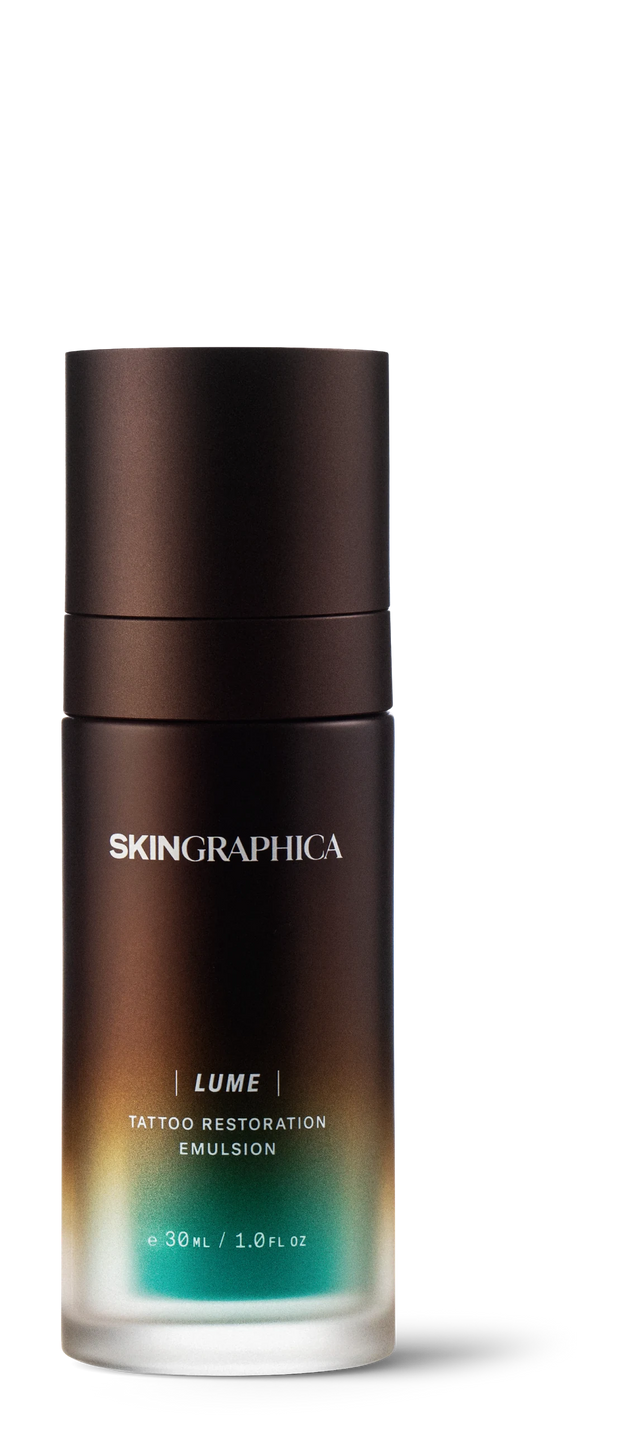
Keep the skin itself in good condition, because hydrated skin shows linework more clearly than dry skin at any age. When a settled tattoo starts to look flat, LUME is our restoration stage for the look of older work. And if a line does soften over the years, a touch up from the original artist is a normal part of owning delicate work.
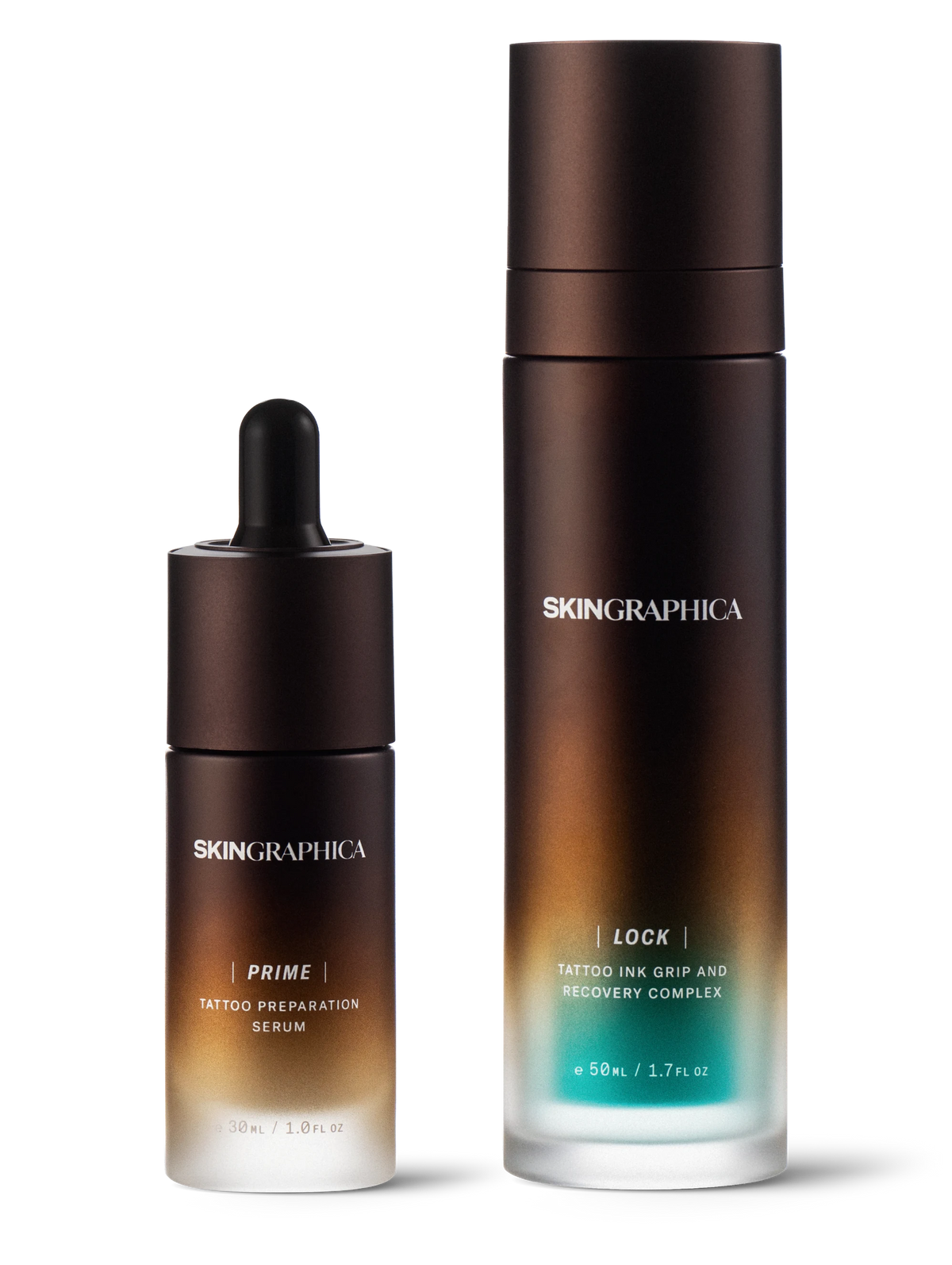
The 4 stages are designed to work as one protocol. A SYSTEM kit brings them together, from the 21 days before the appointment to the years after it.
The artistHow to choose a fine line artist
Ask to see work that has been in the skin for at least a year, not only fresh photographs. Fresh fine line always looks perfect. Settled fine line shows who can really do it.
- Look for clean, even lines with no shadow around them.
- Expect honest advice on size and placement. A good artist will make a design larger or simpler so that it lasts.
- Expect a consultation and a wait. Specialists are booked for a reason.
- Ask how touch ups work before you book.
Several of the artists recognised in GRAPHICA, the Global Top 100, work at this scale.
QuestionsFine line tattoos, answered
What is a fine line tattoo?
A tattoo made with a single needle or a very small group of needles, built from thin, even lines with little or no heavy shading.
Do fine line tattoos fade?
All tattoos soften with time, and fine lines show it sooner because they hold less ink. Skilled work on healthy, sun protected skin can stay elegant for many years, and some pieces will want a touch up.
How long does a fine line tattoo take to recover?
The surface usually settles in about 2 weeks, and the skin beneath keeps settling for several weeks after that.
Do fine line tattoos hurt less?
Often a little, because a smaller needle makes less contact with the skin. Placement matters more than style.
Where do fine line tattoos last longest?
On flatter, protected areas such as the inner forearm, upper arm, ribs and back. Hands, fingers and feet fade fastest.
How do I prepare my skin for a fine line tattoo?
Keep the area hydrated, out of the sun and free of exfoliation in the final week. PRIME is used twice a day for the 21 days before the appointment.
The finer the line, the more the skin matters.
Fine line is the most delicate work in tattooing. Choose a specialist, prepare the skin for 21 days, protect the first 14 and keep the sun off it for life.
This guide is general information. Your artist’s advice comes first, and anyone with a skin condition should speak to a doctor before being tattooed.