Somewhere in New Zealand, a man in his fifties is walking around with a wizard tattooed on his foot.
It’s been there for forty years, ever since a teenager called Brent McCown put it there with a machine they’d built themselves. This was Waiuku in the mid-eighties: a bunch of mates taking turns tattooing each other, because that’s just what you did. Brent held the machine because he was the only one who could draw.
The two of them are still friends. The wizard is still on the foot. “He’s still a good friend of mine, and he still wears the tattoo after forty years,” Brent says, and you can hear how much he loves that.
And the kid who held that homemade machine? Today his name sits on the SKINGRAPHICA Global Top 100, the ranking of the finest tattoo artists on the planet. Hundreds of thousands of people tattoo for a living around the world. One hundred make that list. Brent McCown is one of them.
Not bad for a career that started with a wizard.

He’s 56 now, with 39 years in the trade and at least ten countries a year on the schedule. He’s tapped out Pacific patterns in New York and Milan, run a studio at the foot of the Austrian Alps, and helped carry one of humanity’s oldest crafts into the modern world without breaking it.
And now he’s back home on the Coromandel Peninsula, building a hut in the bush.
More on the hut later. First, the caravan.
Dettol, tobacco and petrol
The professional career started in the late eighties in a caravan in Australia. Then came an old-school biker shop in Darwin. Neither was glamorous. Both were an education.
Back in New Zealand, he learned from the best in the business. Ask him who his mentors were and you get a list: Tim Schröder, Mel Jesson, Mike Earsman, Steve Ma Ching, and Merv O’Connor, the legendary Auckland tattooist who was still working six days a week in his eighties. Then, asked which figures really shaped his approach, Brent gives one more name and nothing else.
Wainui.

Ask him to sum up his style in three words and he doesn’t hesitate. “Bold flow forever.”
That’s not a slogan. That’s the old school in a nutshell. Bold, so the tattoo still reads clearly in thirty years. Flow, so it moves with the body it lives on. Forever, because that’s the whole point.
And if you want to know exactly what kind of tattooer you’re dealing with, here’s what he says matters most to him after four decades: “Respecting the past and preserving that for the future. I’m really about the old school of tattoo.” Then he adds, completely unprompted: “PS, I really like the smell of dettol, tobacco and petrol.”
If you’ve ever stood in a proper old street shop, you just smelled it too.
From the interview
“Bold flow forever.”
Two sticks
Long before tattoo machines existed, tattooing had a sound. Two sticks. One holds the comb, one does the tapping. Across the Pacific, for thousands of years, that steady tap-tap-tap was how ink got into skin.
Brent found his way to it almost by accident. His neighbour was a tatau artist, and Brent started helping out, cleaning and building the traditional tools. Curiosity did the rest. Before long, the hand tools weren’t a side interest. They were a second calling.
Then he did something quietly important. The old tools had a problem: wooden handles and bone combs can’t survive modern sterilisation. Beautiful, yes. Autoclave-friendly, no. So Brent became one of the people who rebuilt the kit, swapping wood and tusk for sterile steel and materials that can take the heat. Same method, same tradition, new hardware. Because of work like his, the oldest technique in tattooing gets to keep going.

That’s the thing about Brent’s career. Half of it has happened on skin. The other half has happened in service of the craft itself.
Then he took it everywhere. For years his studio, Tattoo Tatau, sat in Villach in the south of Austria. Yes, Austria. A Kiwi hand-tapping Pacific patterns with the Alps out the window, collecting convention awards in New York, London, Milan, Amsterdam and Copenhagen along the way.
Ask him which countries he’s tattooed in and he laughs. “Which haven’t I? We do at least ten different countries a year.”
It’s not sightseeing. “I’m very hungry to learn the similarities between cultures, and especially the tattoo cultures of the places we travel to,” he says. “Whether they are awake and alive, or asleep.”
Some tattoo traditions are thriving. Some are fading, remembered more than practised. Everything Brent does is on the side of awake.

These days, the name he works under is Te Rongo ō Te Whaowhao: the vibration and the sound of the tapping stick. He carried that sound around the world for four decades. Now his work is named after it.
It takes three
Here’s what most people get wrong about a Brent McCown tattoo: they picture one artist, hunched over, doing it all himself.
“We work as a team on the floor. It’s three of us,” he says.
One person places the ink. That’s Brent. One person lies “nice and still”, staying calm and off their phone. That’s you. And yes, he means the phone bit.
And the third person is the one Brent insists does the real work: his wife. She’s his stretcher, presenting the skin exactly where he needs it and holding it firm “so the ink goes in clean”, keeping the whole day running smoothly while he does the part that gets photographed.
Notice the “we”, by the way. It’s never “I” with Brent. The two of them travel together, work together and live this life together. “We love what we do,” he says. “We live, sleep and eat this, and we’re very fortunate to be able to do this.”

There’s no stencil, either. No printout, no transfer paper. The design is drawn straight onto the body, and every pattern is built freehand, the old way, shaped around your muscles, your frame and your story.


Which is why our usual question about the lonely fifteenth hour of a marathon session doesn’t really land with him. “I consciously try hard not to make it just me, the skin and the needle,” he says. “The largest part of the process for me is the person I’m tattooing and the journey we share together.”
And after four decades of those journeys, he knows why people really come. “Everybody’s story is very interesting, and they’re all looking for a connection and a belonging,” he says. “Most commonly it’s a loss or a change that people are looking for, and reconnecting through tattoo is something I’m very passionate about.”
Someone walks in carrying something heavy. They walk out wearing something that holds it. That’s the part of the job that never shows up on Instagram, and it’s the part he cares about most.
Breath
We asked what advice he’d give his Year One self. Thirty-nine years of hard-won knowledge, boiled down for the teenager with the homemade machine.
He gave us one word.
“Breath.”
That’s it. That’s the masterclass. And honestly, it holds up. Freehand lines can’t be rubbed out, and a steady hand starts with slow lungs. Panic makes short breaths, and short breaths make shaky lines. Besides, nobody lasts four decades in this game running on adrenaline.

His definition of good work is just as down to earth. “Having an amazing day with a client, with lots of laughs, and creating something we’re all happy with. Without having a sore back.”
Most artists at his level answer that question like they’re accepting an award. Brent mentions his back. He’s planning on being here a while.
And the cost of a life like this? He answers honestly and lets the laugh do the heavy lifting. “Marriages, haha. And lots of free time.” Then comes the line that explains everything: “I had to make tattooing my enjoyment, which I wouldn’t have changed for the world. The journey has been amazing.”
From the interview
“I had to make tattooing my enjoyment, which I wouldn’t have changed for the world. The journey has been amazing.”
Built to last
Every artist in this series gets the same curly question. A tattoo ages, softens and eventually disappears with its wearer. How does that change the way you work?
Some artists get philosophical. Brent gets practical.
“The longer I’ve been tattooing, the more that has been a focus,” he says. “Bold with less skin damage has been the key.”

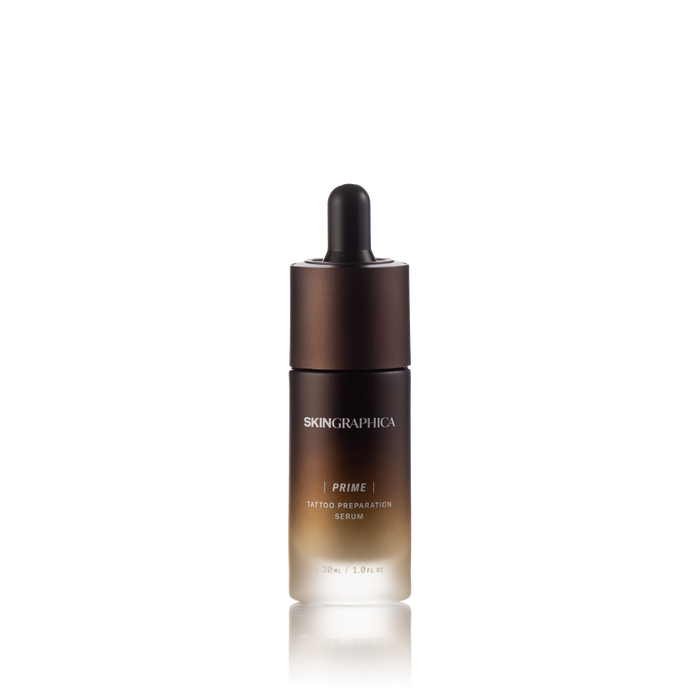
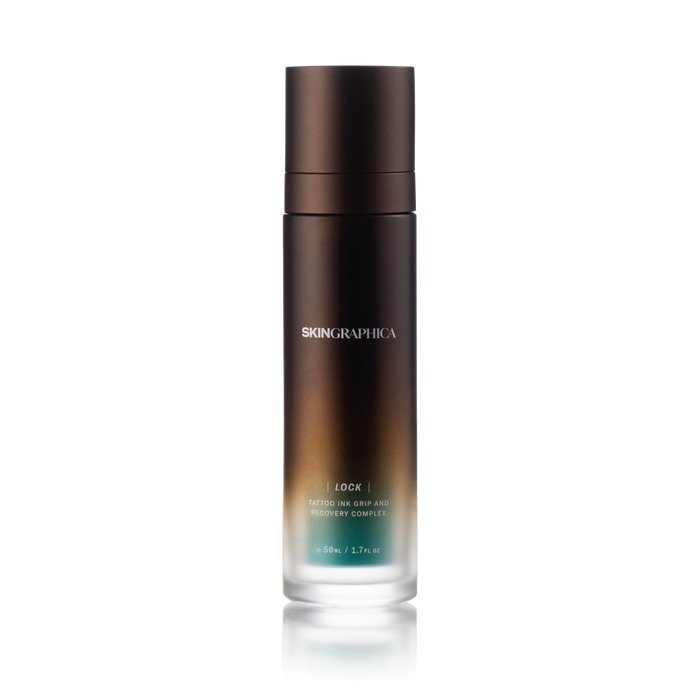
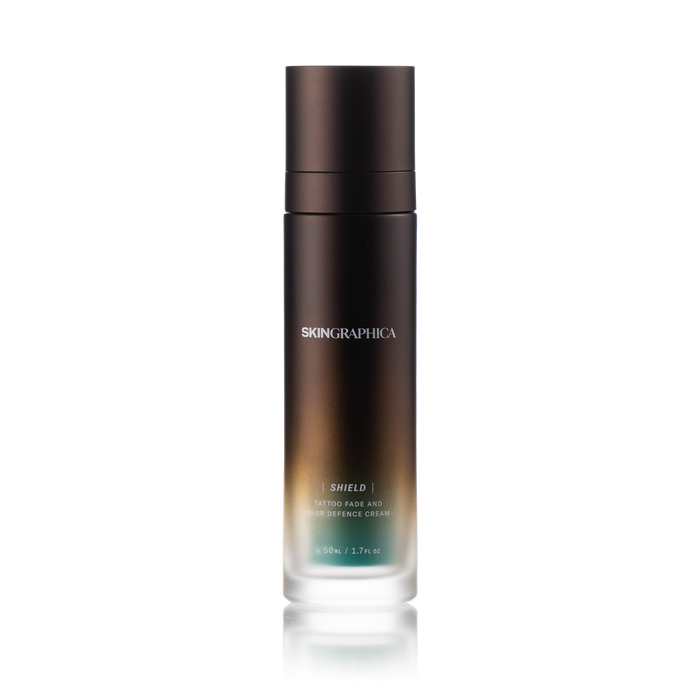
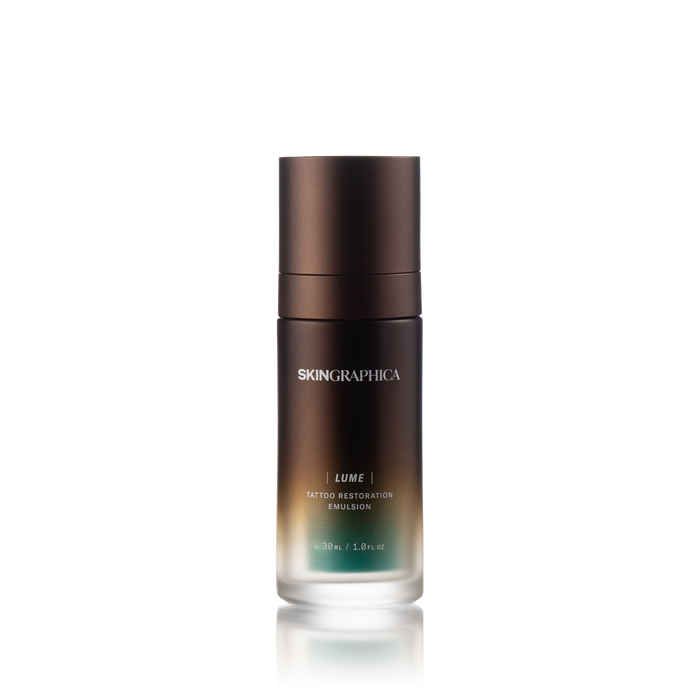
Translation: build it to age well. Strong marks. Smart placement. And as little trauma as possible to the skin that has to carry the work for the next fifty years. “Healthy canvas has been the biggest change,” he says, and he’s quick to credit modern skin science, SKINGRAPHICA included, with changing what’s possible in how tattoos go on and how they’re cared for afterwards.
Spot the pattern. The same bloke who re-engineered ancient tools so they could pass a health inspection is now applying that thinking to skin itself. For Brent, tradition has never meant refusing new things. It means using whatever keeps the old things alive.

One of the hundred
Now, let’s talk about that ranking.
The SKINGRAPHICA Global Top 100 exists to answer one question: of all the tattoo artists working on earth, who are the very best? Hundreds of thousands of people practise this craft. One hundred names make the list. Brent McCown’s is one of them.
Rankings usually celebrate the new. The breakout style, the viral piece, the name of the moment. This one also knows how to honour something much rarer: 39 years of showing up. Bold work that still reads across a room decades after it went on. An ancient method rescued, rebuilt and kept alive for the next generation. And thousands of people across the world wearing his lines through their hardest losses and their best new chapters.
Ask him how it feels to be ranked among the finest artists alive and he handles it the way he handles everything. With a shrug and a grin. “I haven’t noticed it, or think about it. I still approach my work like I did when I started. We are all just crazy artists, right? That try to maintain and be sane.”
From the interview
“We are all just crazy artists, right? That try to maintain and be sane.”
The humility is real. It’s also exactly why he’s on the list. The Global Top 100 rewards the long game, and few people in tattooing have played a longer one, or played it with more heart.

Forty years ago, he was the kid who could draw. Today he’s one of the hundred best on the planet.
And he still acts like the kid who could draw.
The hut in the bush
Ask about legacy and most artists have a speech ready. Brent waves it off. “I don’t really think about it too much. I’ve just really loved to be a part of it, and have met and laughed with so many amazing people along the way.”
Then, almost casually, he mentions the best plan we’ve heard all year.
“We’re building a creative whare in the bush,” he says, “where people can come and disconnect from the rat race and their lives, and reconnect to nature, and get tattooed traditionally, the way it used to be.”
Think about that for a second. No convention hall. No queue. No phone reception worth mentioning. Just bush, birdsong, three people and that steady tap-tap-tap. He and his wife feel lucky to live this life, he says. The whare is what that gratitude looks like with a roof on it.
From the interview
“We’re building a creative whare in the bush, where people can come and disconnect from the rat race and their lives, and reconnect to nature, and get tattooed traditionally, the way it used to be.”

He reckons he hasn’t thought much about his place in tattoo history. We’d politely disagree, because the record is already written. It shows a kid from Waiuku who built his own machine and never looked back. A craftsman who helped save an ancient method from being regulated out of existence. A husband and wife who turned tattooing into a team sport. One of only one hundred names on the world’s definitive ranking of the craft. And a man now clearing a patch of bush so the tradition he loves has a home after him.
That’s what a Global Top 100 career actually looks like. It doesn’t always look like fame. Sometimes it looks like a hut in the bush, a partner holding the skin firm, and a mate who’ll still roll down his sock in the pub to show you the wizard.
Cultures, Brent says, are either awake and alive or asleep. Stand on the Coromandel in a year or so, near a hut he’ll swear is just a hut, and you’ll hear exactly which one this is.

Two sticks. A big laugh. Tap, tap, tap.
Bold flow. Forever.
Brent McCown is a SKINGRAPHICA® Global Top 100 ranked artist and the ICONICA Featured Artist for September 2026.
He works from the Coromandel Peninsula, Aotearoa New Zealand, and at conventions and guest spots worldwide.
Bookings · Coromandel & Worldwide Guest Spots
Enquiries
Brent McCown works as Te Rongo ō Te Whaowhao from the Coromandel Peninsula, Aotearoa New Zealand, with convention dates and guest spots across at least ten countries a year. Every piece is drawn freehand, directly on the body, and made to order around your story. For availability and enquiries, reach out via Instagram.
Portfolio
Hand-tap tatau · selected works
© Brent McCown, 2026
Licence & Credits
This article may be reproduced or shared in full, provided it is credited to SKINGRAPHICA and linked back to this page.
Photography of Brent McCown © SKINGRAPHICA. Tattoo works pictured © Brent McCown.
© SKINGRAPHICA · ICONICA · September 2026