Swimming With a New Tattoo: When Is It Safe?
How long after a tattoo can you swim? Wait at least 2 weeks before any swimming, and around 4 weeks before the ocean, lakes or a hot tub. It is a familiar moment, realising you have booked a fresh sleeve and a beach holiday in the same fortnight. Here is what is actually happening, and why the timeline matters more than it sounds.
The Science Why Water Is the Enemy of a New Tattoo
For the first 2 to 4 weeks, your tattoo is in some stage of wound healing. Submerging a wound in water, any water, introduces 3 problems at once, and they compound each other.
Bacterial exposure. Pools, oceans, lakes, hot tubs and even bathtubs contain bacteria that chlorine and salt do not fully eliminate. Pseudomonas, mycobacteria and various skin flora are common. Healthy intact skin shrugs them off. Broken skin is an open invitation.
Pigment leaching. Prolonged water exposure causes the skin to soften and the protective protein film over the healing tattoo to break down prematurely. This can pull pigment up out of the dermis before it has fully settled, lightening lines and washing out colour saturation in patches.
Scab and flake disruption. Pool chemicals, saltwater and the mechanical friction of swimming all loosen scabs and peeling skin earlier than they would naturally come away. Pigment is lifted with them.
Together, these effects do not just slow healing. They can permanently alter how the finished tattoo looks. The damage is not always reversible.
The Timeline How Long After a Tattoo Can You Swim?
Days 0 to 14 · Absolutely Not
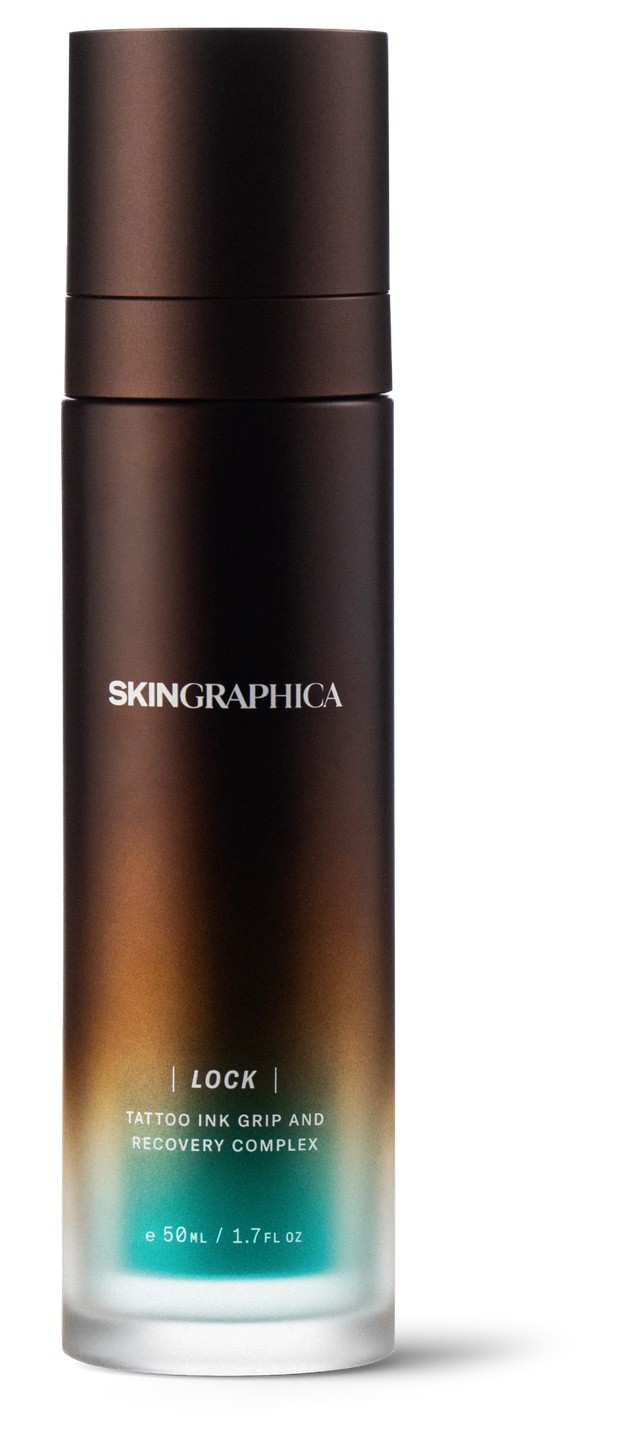
For the first 2 weeks, no swimming of any kind. No pools, no ocean, no lakes, no hot tubs, no extended baths. Showering is fine, as long as it is quick and lukewarm, with the spray off the tattoo. Anything that involves submerging the tattoo, or letting water sit on it for more than a few seconds, is off-limits. Keep up your aftercare protocol instead, with a thin layer of LOCK to support the skin while it heals.
This is the non-negotiable phase. The skin is still actively producing plasma, the barrier has not formed and the risk-to-reward ratio of a swim is extreme. There is no way to make swimming safe in the first 14 days.
Days 14 to 21 · Still Cautious
By the end of week 2, surface healing is mostly complete. The peeling phase is finishing, the redness has gone, the tattoo looks roughly like a tattoo again. But the new skin underneath is still thin and the deep heal has barely started.
Brief, controlled exposure to a clean swimming pool may be acceptable for some tattoos at this stage, particularly small fine-line work that has clearly fully peeled. Larger pieces, colour-heavy work and anything still showing any flaking should wait. If in doubt, wait, and ask your artist.
Days 21 to 30 · Transitioning
By weeks 3 to 4, most tattoos can return to normal pool and short-duration ocean exposure. The skin barrier has reformed. The tattoo is no longer a wound. Common-sense limits still apply. Rinse off thoroughly afterwards, don’t soak for long stretches and avoid hot tubs in particular, since warm water is a paradise for bacteria.
Day 30 Onwards · Back to the Water
From day 30, swimming is back on the menu. The surface heal is complete, and the deep remodelling that continues for several months is not meaningfully affected by water exposure at this point. The remaining considerations are about long-term tattoo longevity rather than healing safety, and that is where the sun-and-water combination becomes the conversation.
At least 2 weeks, ideally 4. The damage from rushing it is often hard to undo.
Different Waters Pool, Ocean, Lake or Hot Tub? Each Has Different Rules
Not all water is equal. Risk varies meaningfully across types.
Chlorinated Pools
The safest of the bad options once healing is well underway. Chlorine controls most bacteria. The problem is the chlorine itself. It dries the skin, and prolonged exposure to a healing tattoo can lighten ink and irritate the surrounding area. After the first month, a lap or a brief swim is fine. In the early healing window, even a clean chlorinated pool is a no.
Saltwater (Ocean, Sea)
Higher microbial diversity than chlorinated water. Generally less aggressive on the skin than chlorine, but the tattoo will sting if exposed before it has fully healed. Avoid for at least 3 weeks, ideally 4.
Freshwater (Lakes, Rivers)
The riskiest of the natural options. Lakes and slow-moving rivers can carry higher concentrations of the bacteria most associated with skin infections. Avoid for the full 4 weeks at minimum.
Hot Tubs and Spas
The worst possible water. Warm temperatures accelerate bacterial growth, and the agitation forces water deep into any healing area. Avoid hot tubs for a minimum of 4 weeks, longer if you can.
Bathtubs
Submerging in a bath is essentially the same as submerging in still freshwater. Quick rinse-style baths are fine after the first day, but no soaking until at least week 3.
The Holiday Question What If You Have a Beach Holiday Booked?
You have 2 real options if a holiday falls inside your healing window, and only one of them is good.
Option 1. Reschedule the tattoo. This is the right answer if the trip cannot move. A few weeks of waiting is nothing compared to a piece of art on your body for the next 50 years. Most artists will accommodate a date shift if you ask early.
Option 2. Medical adhesive films. Breathable, water-resistant films are designed to be left on healing tattoos for several days, and can offer a barrier for short, controlled water exposure if applied correctly. They are not a free pass. They should not be used to swim laps, soak in hot tubs or stay in the water for extended periods. They are a mitigation, not a workaround. Ask your artist before relying on this approach.
What does not work? Cling film, plasters, “I’ll just stay shallow” and “I’ll just rinse it after”. The infection risk is real, and an infection in a healing tattoo can progress quickly.
After Healing Why Sun and Water Fade Healed Tattoos Faster
Once your tattoo is fully healed, swimming is no longer a healing risk. It is now a fade risk. Pool chlorine, saltwater and freshwater all dry the skin, and dry skin makes tattoos look duller. Combine that with the sun exposure most swimming involves and fading can speed up.
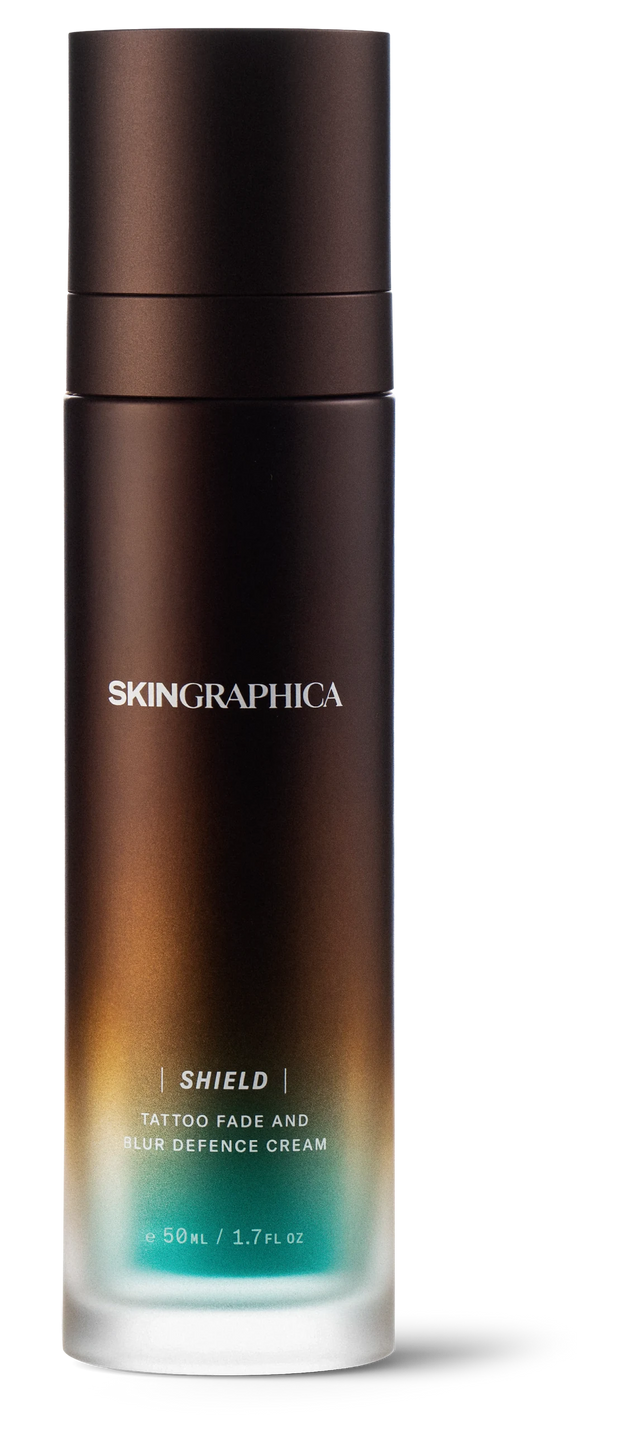
This is the part most aftercare advice skips. Daily protection guards against UV. Daily moisturisation guards against the optical dulling of dehydrated skin. SHIELD tattoo defence cream combines both in one product, with broad-spectrum SPF15 from organic filters, formulated to sit invisibly on saturated tattoo work.
SHIELD is built for the incidental exposure of ordinary days, not for the beach. Use SPF50+ for long days outdoors and by the water. Apply it generously and reapply every 2 hours and straight after swimming. That is 2 products, each doing its own job.
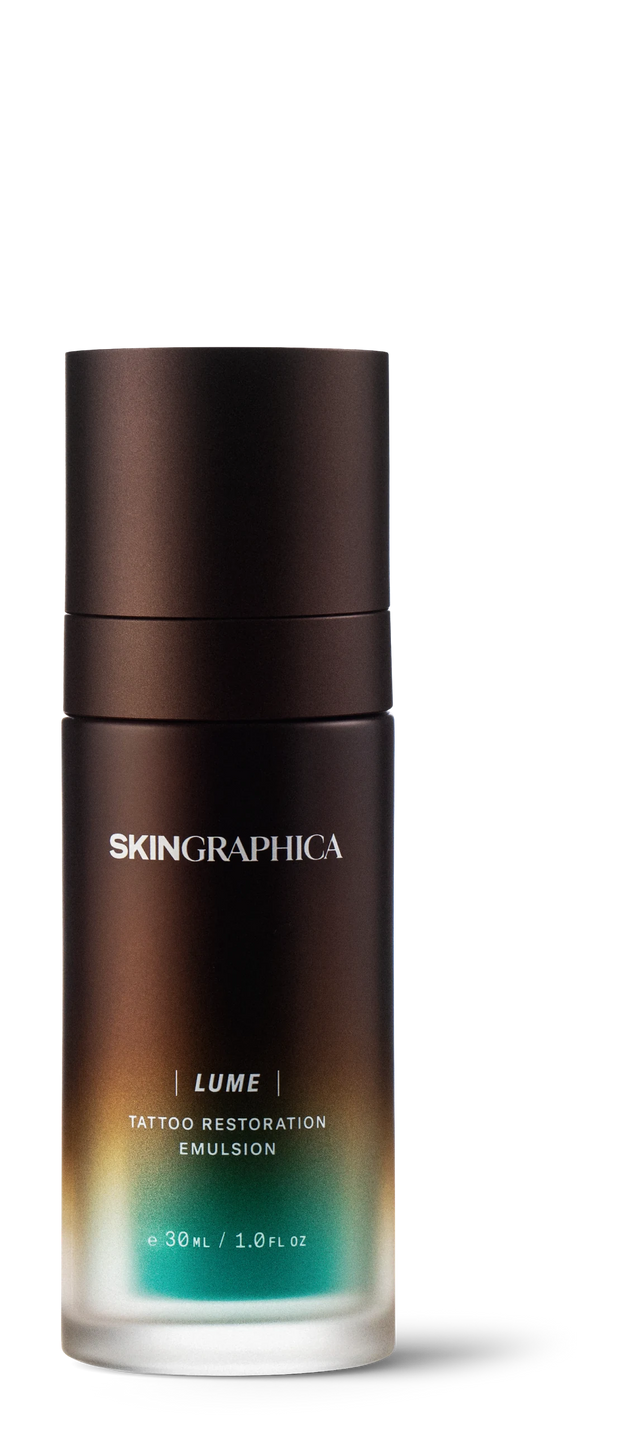
For tattoos that have already lost some of their original brilliance to chlorine, salt and sun, and many have, LUME tattoo restoration emulsion is a topical option to consider before a touch-up. It is formulated to refresh the look of depth and clarity in faded ink, non-invasively. The Fade Checker on the LUME product page assesses whether your tattoo is a strong candidate.
For the broader healing context, see our complete guide to how long a tattoo takes to heal and the full SKINGRAPHICA® care guide for long-term maintenance.
At least 2 weeks. Ideally 4 if you care about the work.
How long after a tattoo can you swim? The absolute floor is 2 weeks, and 4 weeks is the better answer for any meaningful exposure. After that, the conversation shifts from healing safety to long-term fade, and daily sun protection becomes the highest-impact habit available to you.
This article reflects dermatological best-practice principles and is intended as general guidance on tattoo aftercare. It is not medical advice and is not a substitute for consultation with a qualified healthcare professional. Always follow the specific aftercare instructions given by your tattoo artist. If you notice signs of infection, an allergic reaction or any symptom that concerns you during healing, see your doctor, pharmacist or a registered dermatologist.