Academy
How Tattooing Works
What happens in the skin when ink goes in.
Complimentary shipping over 1 950 kr. VAT and duties included.
Country/region

If you think your local health department’s regulations on needle disposal are a bit much, you should have seen the legal landscape of the year 787. For as long as humans have been pushing pigment into skin, lawmakers have been trying to figure out exactly what to do with it. Throughout history, the tattoo has been everything from a mandated legal punishment to a forbidden act of rebellion, and in some cases, a medical felony.
In the ancient world, the law didn’t view tattoos as a form of self-expression. It viewed them as a permanent filing system for the state. In Ancient Greece and Rome, tattooing was strictly punitive. The law mandated that slaves, criminals and prisoners of war be “marked” so they could never truly escape their status. If you were a runaway slave in the Roman Empire, the law required you to be tattooed on the forehead with the letters F.V.V. (Fugitivus). It was essentially a legal scarlet letter that you couldn’t take off at the end of the day.
Across the globe in Imperial China, the legal system used the “Five Punishments”, one of which was mò, the branding of the face or arms with ink. For a Confucian society that valued the “purity” of the body, this was a legal death sentence for one’s social life. You weren’t just a criminal. You were a walking record of your crime.
As the Roman Empire transitioned into a Christian one, the legal status of the needle took a sharp turn. Early Christians actually used tattoos to identify one another during periods of persecution, but the authorities eventually caught on. In 787 AD, Pope Hadrian I officially moved to ban tattooing across the Christian world, declaring it a pagan superstition that defiled the “image of God”.
This wasn’t just a suggestion. It became a cultural law that effectively erased tattooing from European society for nearly a thousand years. The only people who managed to skirt these laws were the Crusaders. When they reached the Holy Land, many ignored the ban and got tattooed as a legal “insurance policy”. If they died in battle, the ink ensured they would receive a Christian burial rather than being tossed into a mass grave.
Fast forward to the 19th century, and the legal drama moved to Japan. During the Meiji Restoration in 1872, the government was desperate to look “modern” and “civilised” to Western visitors. To achieve this, they made tattooing, an art form the Japanese had perfected over centuries, completely illegal for their own citizens.
However, the law had a curious loophole. It didn’t apply to foreigners. While the Japanese police were arresting locals for having ink, they were simultaneously inviting Western royalty into tattoo parlours to show off the nation’s “exotic” skills. Both King George V of England and Czar Nicholas II of Russia famously took advantage of this legal double standard, getting inked while visiting Japan during the ban.
You might think the days of banning tattoos ended with the Middle Ages, but New York City held a grudge well into the modern era. From 1961 until 1997, it was actually illegal to get a tattoo in the five boroughs. The city cited a Hepatitis B outbreak as the legal justification, but historians argue it was actually a “beautification” project meant to scrub the city’s image clean for the 1964 World’s Fair.
For 36 years, the NYC tattoo scene went underground, and the stakes were high. Artists worked out of secret lofts in Greenwich Village, and clients had to know a guy who knew a guy just to get a small piece of flash. It wasn’t until a group of artists took the city to court that the ban was finally lifted, proving that even the law can’t keep a good needle down.
Today
Even today, the law and the needle remain in a complicated relationship. While most countries now treat tattooing as a regulated business, some regions still maintain regulations that range from protective to downright bizarre.
Until very recently, tattooing was legally a “medical procedure”. This meant artists needed a medical degree to work, forcing the entire industry into a legal grey area for decades.
A 1966 law technically prohibits tattooing the hands, neck or face. While largely ignored today, it remains on the books as a vestige of “decency” laws.
It is strictly illegal to get a tattoo of the Buddha if you aren’t a practising Buddhist. Tourists have been detained or deported for treating religious symbols as “cool art”.
From 2022, the EU’s REACH regulation restricted thousands of chemicals in tattoo inks. In 2023 the restriction reached 2 pigments behind many popular blues and greens, forcing ink makers to reformulate.
What comes next
As we move further into the 2020s, the legal battleground has shifted from “Can you have it?” to “Who owns it?” We are currently seeing a surge in copyright lawsuits where tattoo artists are suing video game companies and movie studios for depicting their work on the bodies of celebrities and athletes without permission.
The history of the law and tattoos shows us that while the state can try to brand us, ban us or regulate our pigments, the human desire to mark the skin is an un-erasable part of our story. The law might change with the season, but the ink is permanent.
Continue exploring
Academy
What happens in the skin when ink goes in.

Academy
Why tattooed skin needs different care.

Care
What to do before, during and long after your appointment.
The SKINGRAPHICA protocol
4 Ink-Safe™ formulas, each made for one stage of your tattoo’s life. Start with the stage you are in today.
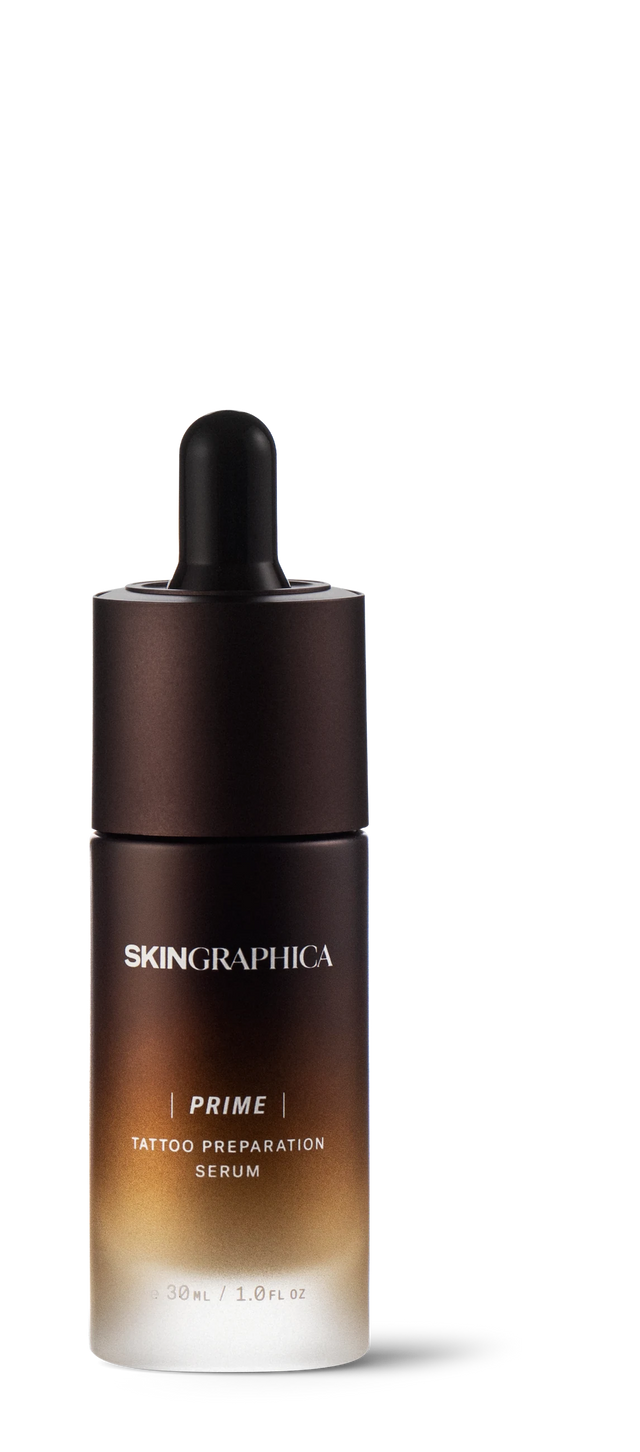
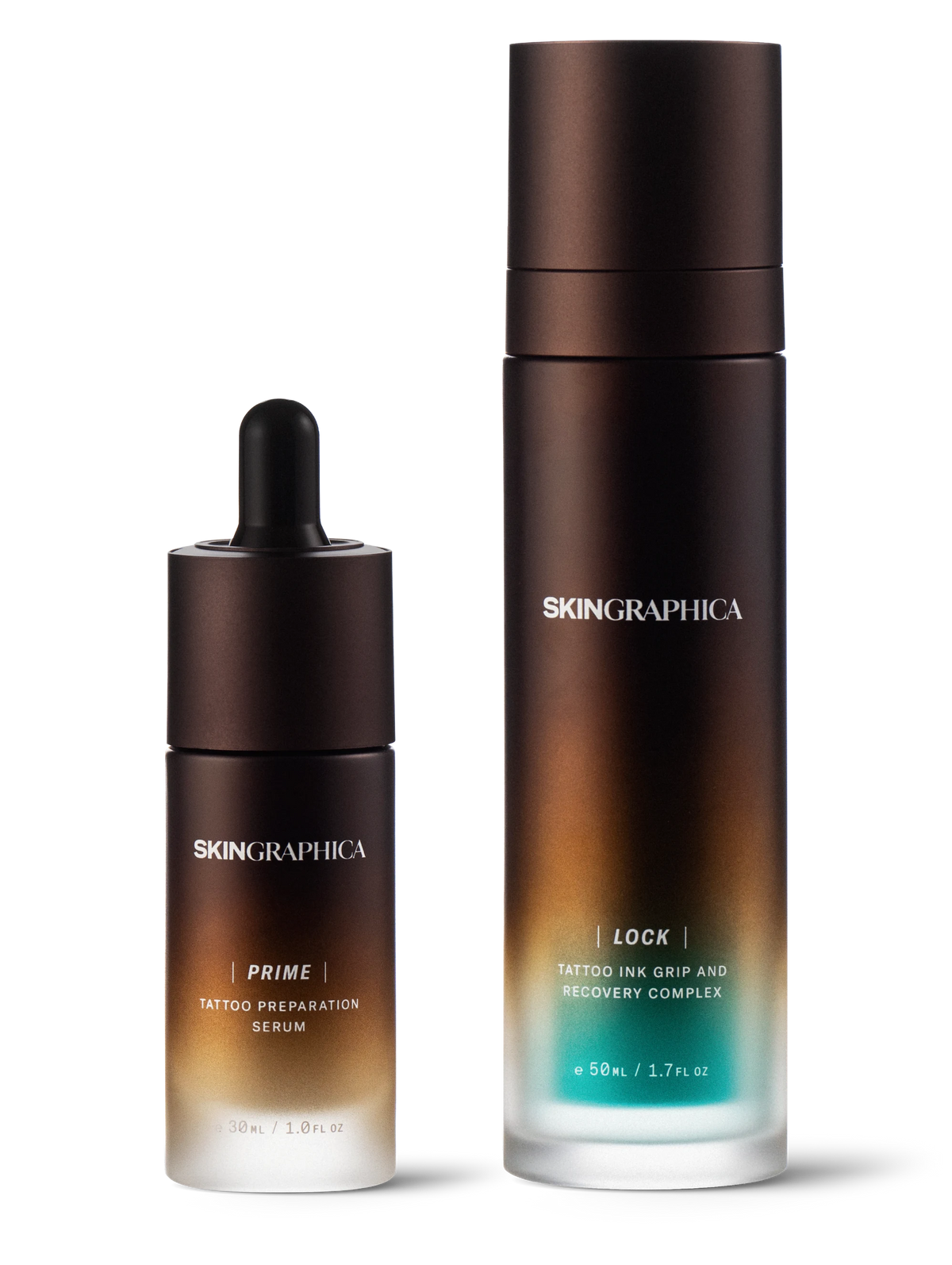
Tattoo Preparation Serum
30 mL · 1.0 fl oz
Skin that takes ink evenly, for sharper lines and fuller colour.
5.0 (9)1 550 kr
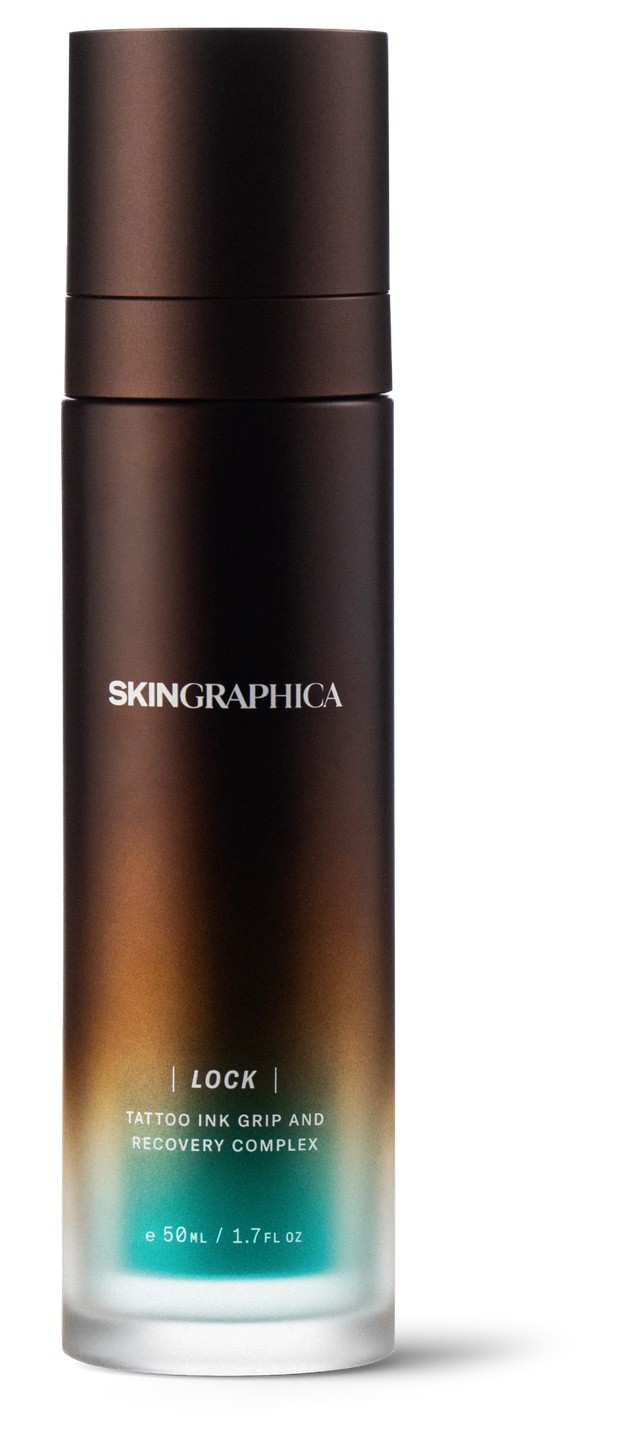
Tattoo Ink Grip & Recovery Complex
50 mL · 1.7 fl oz
Holds pigment in place through the 14 days that decide how much stays.
4.8 (9)1 650 kr
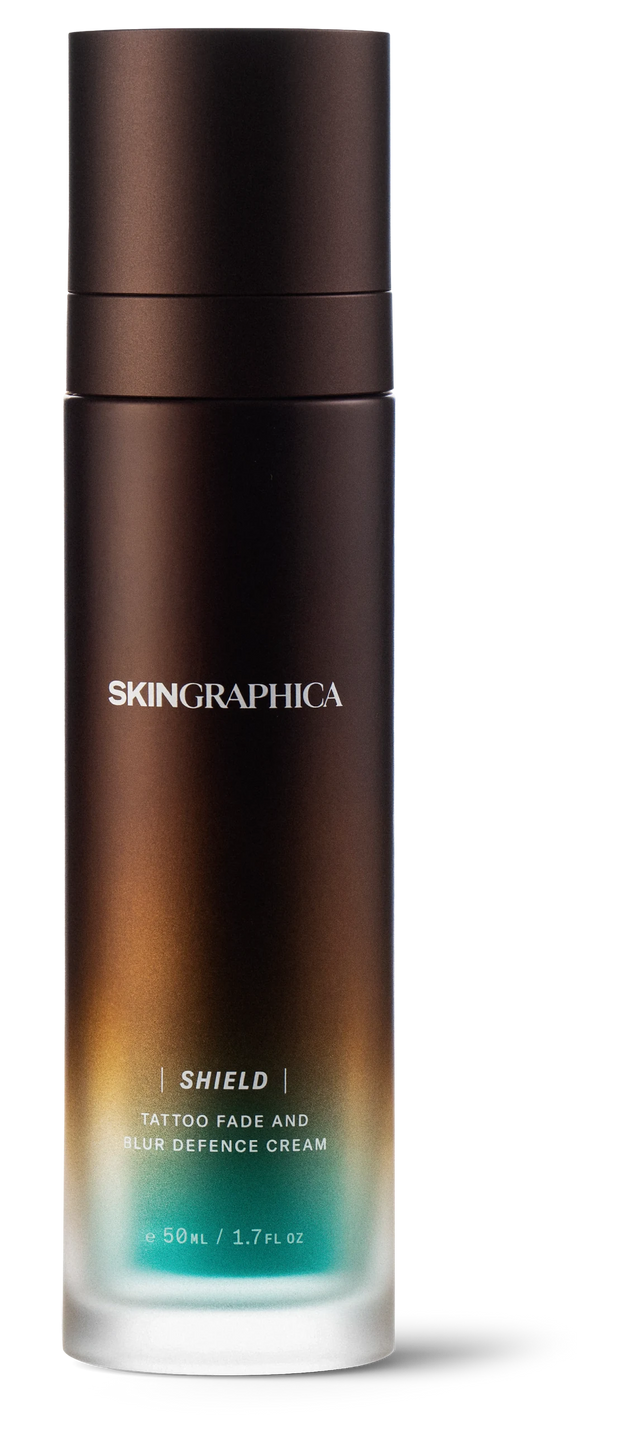
Tattoo Fade & Blur Defence Cream
50 mL · 1.7 fl oz
Keeps healed lines sharp and colour true against everyday light.
5.0 (8)1 450 kr
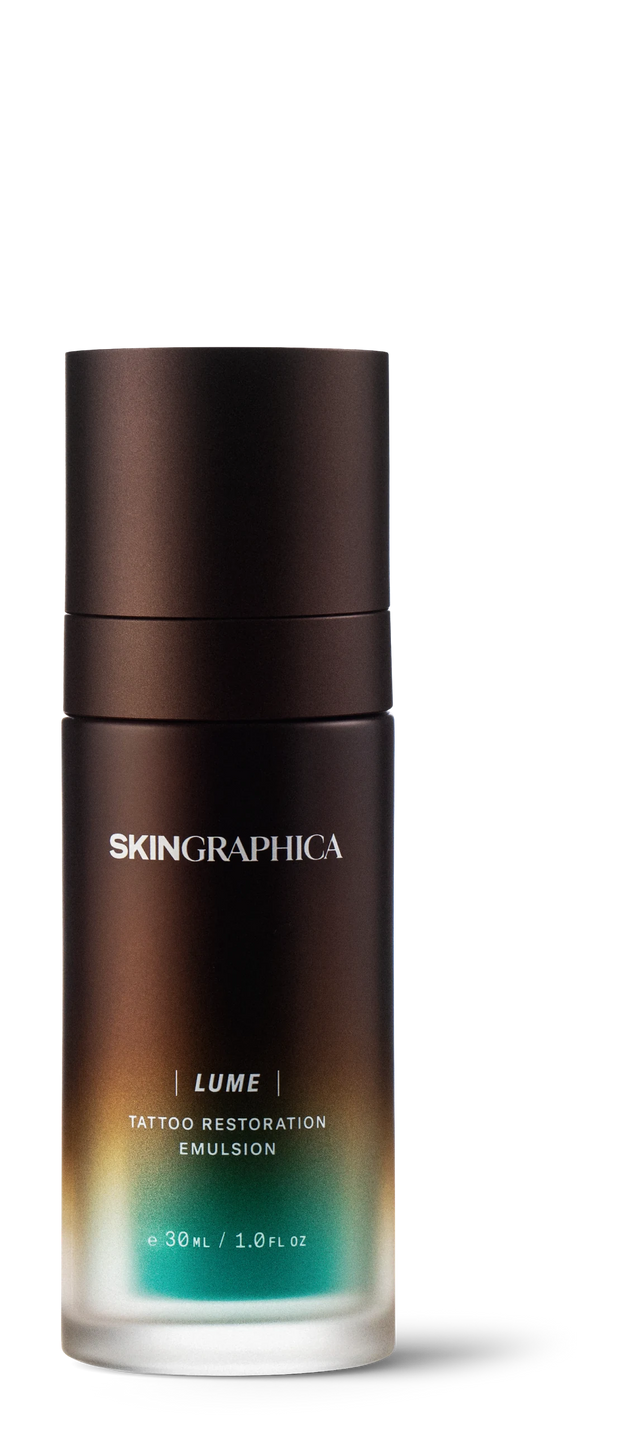
Tattoo Restoration Emulsion
Refreshes the look of faded ink, bringing back definition and brightness.
5.0 (15)Choose a size
2 250 kr
 Curated systemsEvery stage together, for less.SYSTEM, SYSTEM PLUS and SYSTEM LUX. Curated systems from 2 690 kr.View the systems