The Tattoo Care Guide

Tattoo care, stage by stage.

Everything you need, from 21 days before your appointment to decades after. Clear steps, honest science and a plan built around your date.

Build my plan
  1. 01Prepare21 days before
  2. 02RecoverDay 0 to about 4 weeks
  3. 03ProtectOnce healed, for life
  4. 04RestoreFrom about 3 years

Your care plan

A plan built around your date.

Answer a few quick questions. We will map every step with real dates, for your skin, your age and your tattoo.

Where are you at?
When is your appointment?When did you get it?
How old are you?
Where is it on your body?
How big is it?
What style?
Is this your first tattoo?

Your plan appears here

Start with where you are at. Every answer sharpens the dates and tips.

Stage 01 · 21 days before

Prepare the canvas.

Calm, hydrated, unbroken skin takes ink well and heals well. The 3 weeks before your appointment are yours to get right.

Your countdown

  1. 6 weeks or more

    Book a registered studio and get any moles checked. Speak to your doctor first if you take blood thinners, have diabetes or a skin condition, or are pregnant or breastfeeding. If you smoke, this is the time to stop.

  2. 21 days

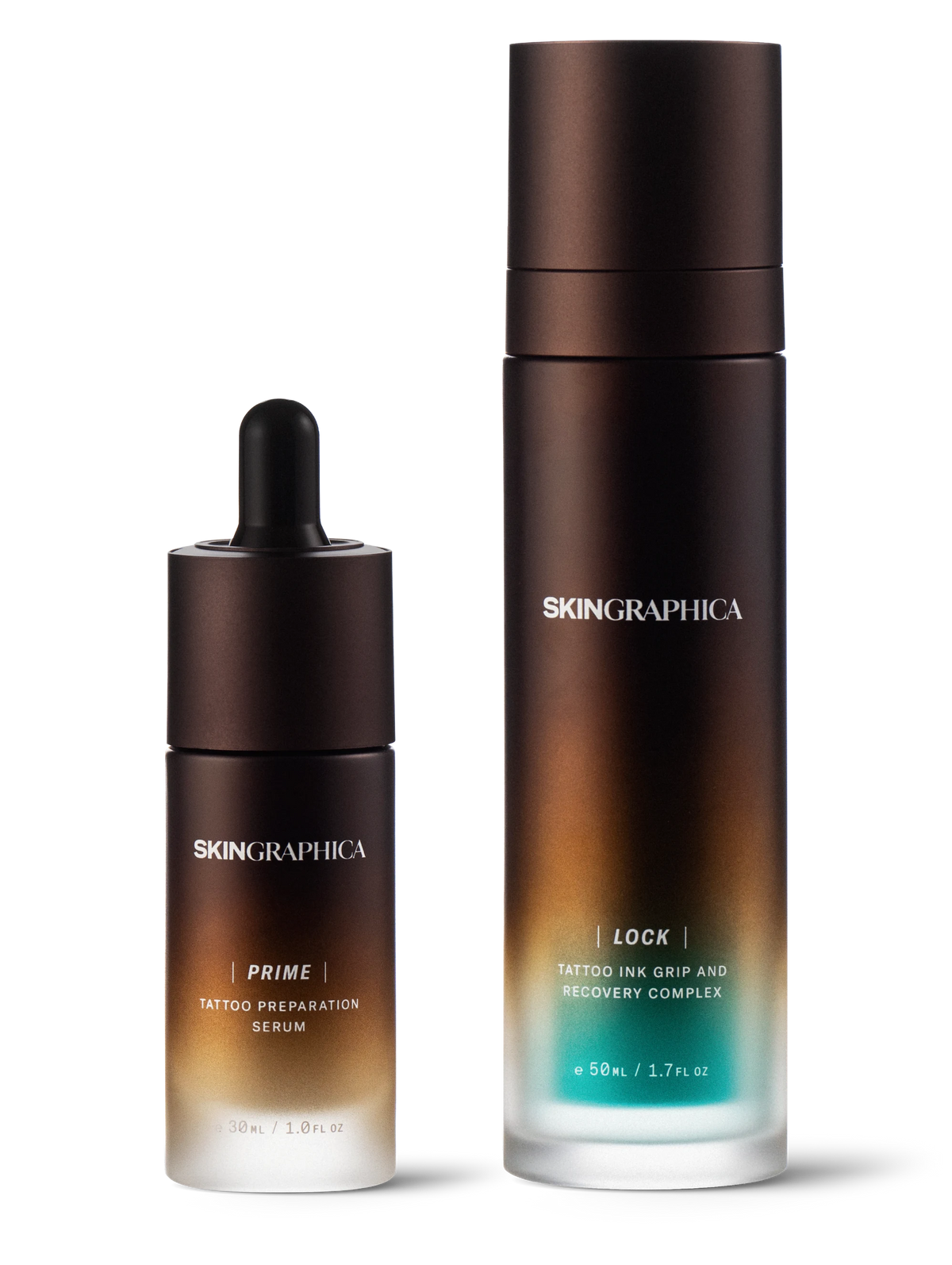
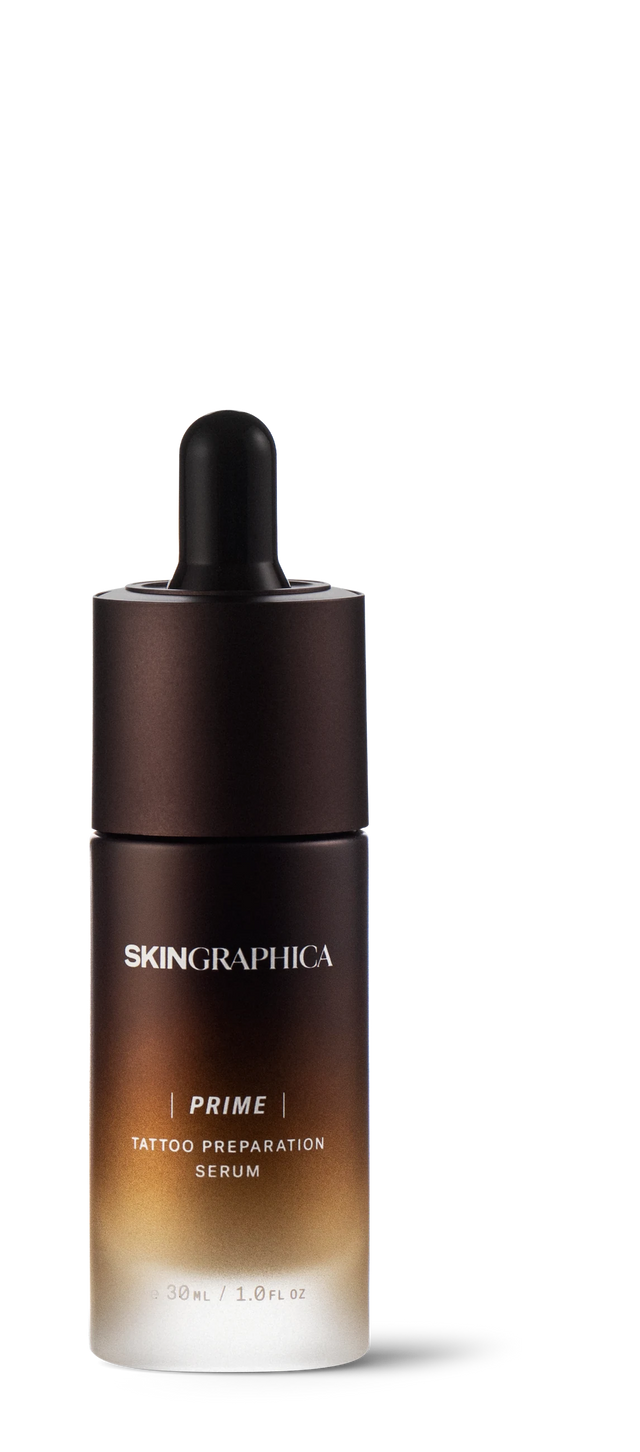
    Start PRIME on the area, a thin layer twice a day. Keep the skin out of the sun.

  3. 7 days

    Pause retinoids, acids and scrubs on the area. No peels, waxing, laser or IPL there.

  4. 48 hours

    No sunburn and no tanning. Go easy on alcohol.

  5. 24 hours

    No alcohol. Keep caffeine moderate and sleep well. Leave shaving to your artist.

  6. 12 hours

    Your last PRIME. Nothing else on the area from here.

  7. On the day

    Shower, eat a proper meal and drink water. Wear loose clothes that give your artist easy access, and bring water and a snack.

Do

  • Choose a registered studio and ask how they sterilise equipment.
  • Have moles or spots checked first and ask your artist to work around them.
  • Moisturise the area every day for the 3 weeks before.
  • Keep the area out of the sun and away from tanning.
  • Sleep well the night before. Rest helps your skin and your pain tolerance.
  • Eat a proper meal before you arrive and bring water and a snack.
  • Tell your artist about allergies, medication and any past reactions.

Avoid

  • Alcohol in the 24 hours before your appointment.
  • Arriving sunburnt, tanned or with broken or irritated skin on the area.
  • Retinoids, acids, scrubs or peels on the area in the final week.
  • Shaving the area yourself, unless your artist asks you to.
  • Heavy creams on the day. Stop leave-on products 12 hours before.
  • Numbing products without talking to your artist and a pharmacist.
  • Stopping any prescribed medication without your doctor.
  • Going ahead if you are unwell. Reschedule instead.

Go deeper

What to eat and drink before
  • Eat a proper meal 1 to 2 hours before. A steady blood sugar makes it far less likely you will feel faint during a long appointment.
  • Drink water through the day before and bring a bottle with you.
  • Keep coffee and energy drinks moderate. Too much makes it harder to stay still.
  • Skip alcohol for at least 24 hours. It affects bleeding during the appointment and reputable studios will not tattoo anyone who has been drinking.
Medication, supplements and numbing creams
  • Never stop a prescribed blood thinner or any other medication without your doctor. Speak to them before you book.
  • Aspirin and ibuprofen affect how your blood clots. Ask a pharmacist about pain relief before and after your appointment.
  • There is no need to stop fish oil before an appointment unless your doctor advises it.
  • High strength numbing creams used over large areas or under wrap can cause serious side effects. Always talk to your artist and a pharmacist first.
Reasons to wait
  • Sunburn, broken skin, infection or an active rash on the area.
  • A fever, a cold sore near the area, or feeling unwell.
  • Blood thinners, poorly controlled diabetes, a bleeding disorder or a weakened immune system, until your doctor has cleared you.
  • A mole in or near the area that is new or changing.
  • Pregnancy. Most professional artists will not tattoo during pregnancy.
Skin conditions, moles and keloids
  • Eczema and psoriasis can flare in a new tattoo, sometimes weeks later. Get your skin settled before you book and never tattoo over an active patch.
  • If you form raised keloid scars, talk to a dermatologist before you commit.
  • Ask your artist to leave moles and spots ink-free so they can always be checked.

Stage 02 · Day 0 to about 4 weeks

Recover. The weeks that shape how it settles.

Your skin is rebuilding over fresh ink. Keep it clean, lightly moisturised, covered from the sun and out of the water. Then let it be.

What you will see, and what to do

  1. Day 0

    You will seeWeeping of clear fluid and excess ink under the covering.

    What to doLeave the covering on as long as your artist advises.

  2. Days 1 to 3

    You will seeRedness, warmth, mild swelling and tenderness.

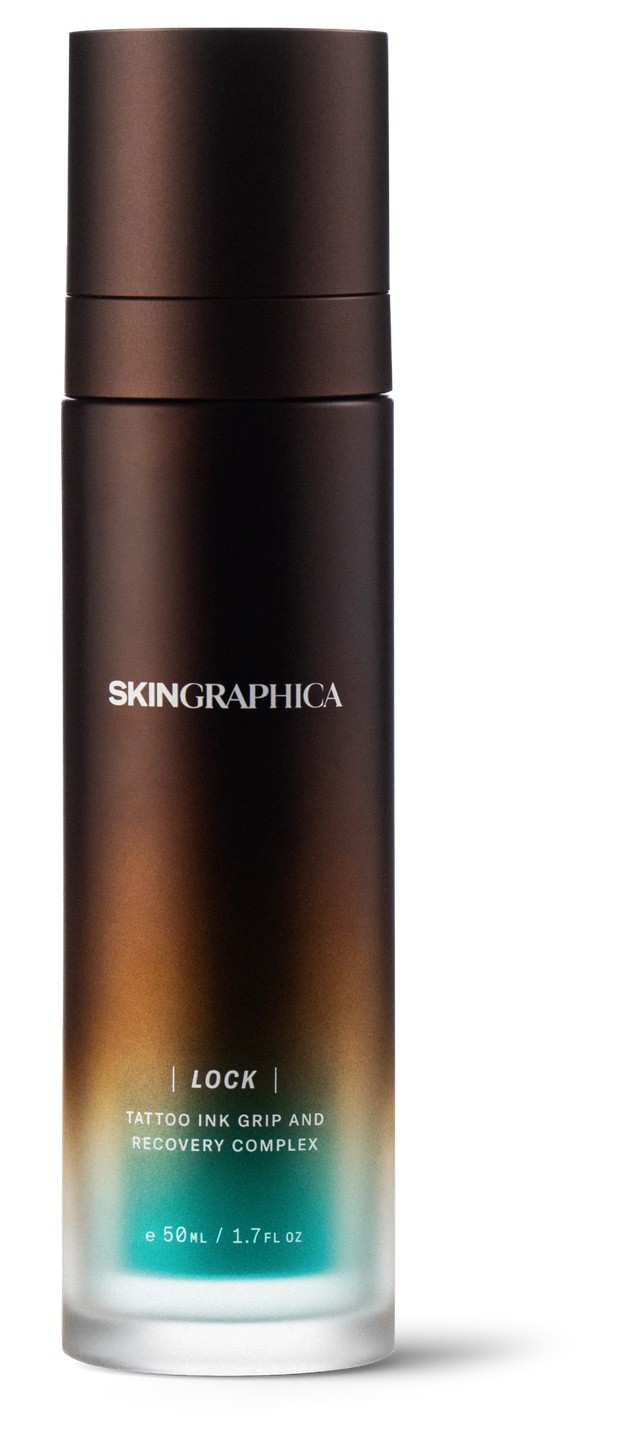
    What to doCovering off. Wash gently twice a day, pat dry, then a thin layer of LOCK. Raise a swollen limb.

  3. Days 4 to 7

    You will seeSwelling settles. Skin feels tight with a light film or crust.

    What to doKeep washing and moisturising lightly. Loose clothes, no soaking, no sun.

  4. Week 2

    You will seeFlaking and peeling like a mild sunburn. Itching peaks.

    What to doNever pick or scratch. Tap the itch and keep it lightly moisturised.

  5. Weeks 3 to 4

    You will seeMost flakes gone. The surface looks shiny or milky.

    What to doKeep going. Still no swimming or sun until there is no shine, flaking or tenderness.

  6. Weeks 4 to 8

    You will seeThe milky look clears and the ink settles and sharpens.

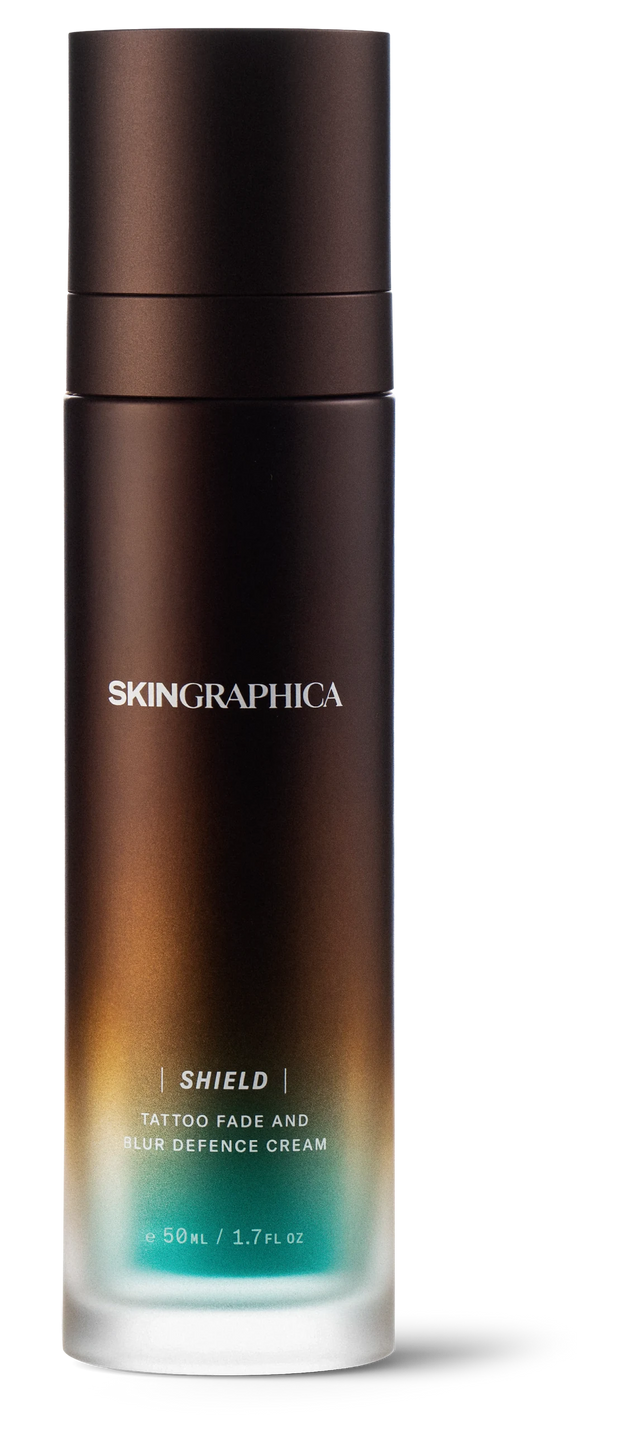
    What to doFully closed. Start SHIELD every day and book any touch-up.

  7. Months 2 to 6

    You will seeDeeper skin keeps remodelling under a healed surface.

    What to doProtect it from sun and friction.

Washing, step by step

  1. 1Wash your hands

    Always, before you touch your tattoo.

  2. 2Lukewarm water

    With a mild, fragrance-free cleanser. Short showers only.

  3. 3Rinse well

    Let water run over it. Never rub or scrub.

  4. 4Pat dry

    With a clean towel or paper towel.

  5. 5A thin layer of LOCK

    Just enough for a faint sheen that sinks in within minutes. Blot any excess.

Do

  • Leave your covering on for as long as your artist advises.
  • Wash gently twice a day, and after sweating.
  • Apply a thin layer of LOCK. It should absorb within a few minutes.
  • Wear loose, clean, breathable clothing over the tattoo.
  • Sleep on clean sheets and keep pets off the bed for 2 weeks.
  • Keep it covered and out of direct sun until fully healed.
  • Let flakes fall away on their own. Tap if it itches.

Avoid

  • Picking, scratching or peeling flakes.
  • Baths, pools, spas, the ocean, lakes or rivers until fully healed.
  • Saunas and steam rooms until fully healed.
  • Thick layers of any product, including petroleum jelly.
  • Antibiotic or antiseptic creams, unless a doctor prescribes them.
  • Makeup, fragrance, oils, self-tan or new skincare on the area.
  • Sunscreen on a healing tattoo. Cover it with clothing instead.
  • Tight or rough clothing, straps or bands over the area.

Life while it heals

ActivityWeek 1Week 2Weeks 3 to 4Healed
Short lukewarm showerYesYesYesYes
Gym, heavy sweat or stretching the areaNot yetWith careWith careYes
Bath or soakingNot yetNot yetNot yetYes
Pool, spa, ocean, lake or riverNot yetNot yetNot yetYes
Sauna or steam roomNot yetNot yetNot yetYes
Direct sunNot yetNot yetNot yetWith protection
Long-haul flightWith careYesYesYes

Yes With care Not yet With sun protection

Go deeper

Wraps and second skin
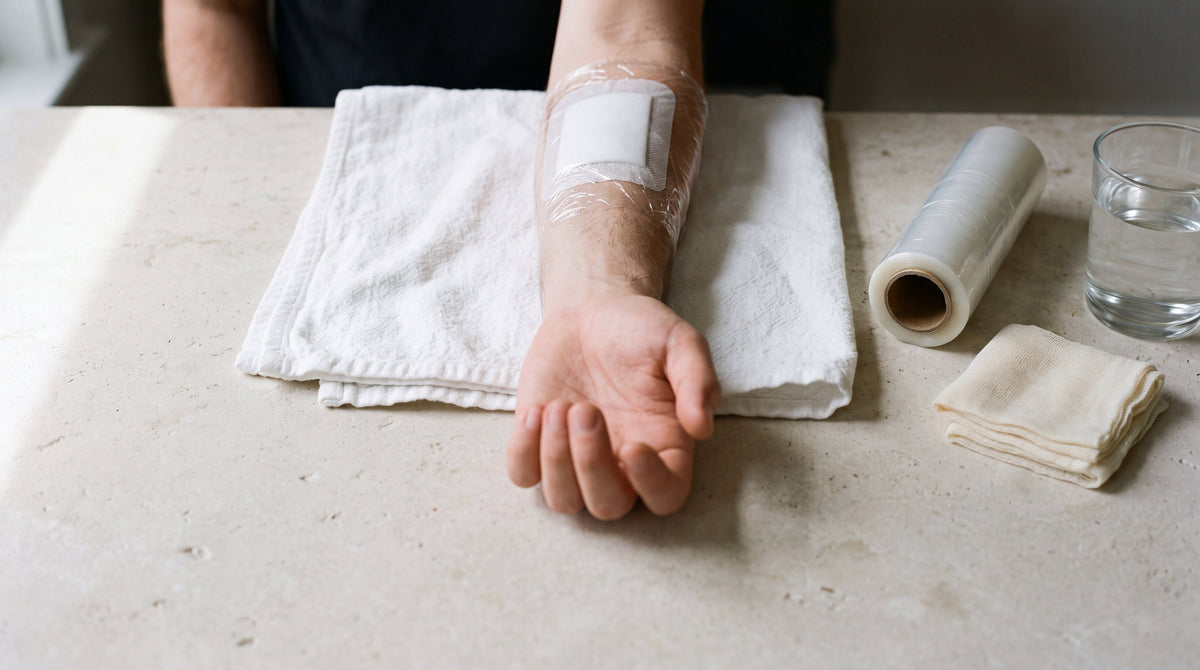
  • Artists use cling wrap, a non-stick dressing or a clear second skin film. Follow their timing. A film can usually stay on from 24 hours to a few days if it is sealed and comfortable.
  • Change or remove it if fluid leaks out from the edges.
  • To remove a film, stand under lukewarm water and stretch it gently along the skin rather than pulling it up.
  • Redness or itch only around the edge of the film can be a reaction to the adhesive. Take it off.
Itching, flaking and the milky stage
  • Itching in weeks 1 to 3 is a normal part of healing, not a sign of infection.
  • Scratching or picking can lift ink with the flakes and leave patchy, lighter areas.
  • A cool, clean compress over clean fabric helps. Ask a pharmacist before taking an antihistamine.
  • A shiny, milky or cloudy look around weeks 2 to 6 is new skin settling. It clears on its own.
Sleeping, clothing and pets
  • Use clean sheets and wear clean, loose cotton. Try not to sleep directly on the tattoo.
  • If fabric sticks to the tattoo, wet it with clean lukewarm water to release it. Never pull.
  • Keep pets off the bed and away from the tattoo, and wash your hands after handling them.
Petroleum jelly and antibiotic creams
  • Thick, heavy layers of anything hold fluid against a weeping tattoo. That is the real problem, not any single ingredient.
  • Dermatology bodies prefer a light, non-petroleum aftercare on new tattoos. LOCK is petrolatum-free.
  • Antibiotic creams are not needed for normal healing and can cause allergic rashes.
When to book a touch-up
  • Only once the tattoo is fully healed, usually 4 to 8 weeks after your appointment, so your artist can judge the settled result.
  • Larger pieces and slower healing areas like hands, feet and ribs can need longer.

While it heals

Normal, or not?

Most of what you see in the first 2 weeks is healing doing its job. Here is how to tell the difference.

  • Redness

    Usually normalMild, limited to the tattoo and fading within days.

    Speak to a doctorSpreading, darkening or more painful redness, or red streaks travelling away from the tattoo.

  • Swelling

    Usually normalMild and improving each day.

    Speak to a doctorSwelling that grows after day 3, or throbs.

  • Fluid

    Usually normalClear or pink fluid with a little ink in the first days.

    Speak to a doctorMore weeping over time, yellow or green discharge, pus or a bad smell.

  • Pain

    Usually normalTender, and easing day by day.

    Speak to a doctorPain that increases, burns or throbs.

  • Temperature

    Usually normalFeeling a little feverish for up to 12 hours after a large piece.

    Speak to a doctorA fever, chills or flu-like feeling, or one that has not settled by the next day.

  • Itch

    Usually normalModerate itch in weeks 1 to 3.

    Speak to a doctorIntense itch with a rash of tiny bumps or blisters, often in 1 colour, or a rash beyond the tattoo.

  • Texture

    Usually normalSlightly raised for a few weeks, then settling.

    Speak to a doctorLumps, nodules or a bumpy rash that appear weeks after your appointment.

Emergency Get emergency help straight away for swelling of the face or lips, trouble breathing, or a rash spreading over your body.

If anything worries you, tell your artist too. They can tell your doctor which inks were used.

Stage 03 · Once healed, for life

Protect. Healed is not finished.

Sun is the biggest cause of fading you can control. UVA reaches the layer where your ink sits, every day of the year, in every season.

Your daily routine

  1. 1Every morning

    SHIELD on every exposed tattoo, as the final step of your routine, 20 minutes before you go out.

  2. 2Every 2 hours outdoors

    Reapply, and again after swimming, sweating or towelling.

  3. 3Long days outside

    Add a broad-spectrum SPF50 or SPF50+ sunscreen, clothing, a hat and shade.

Do

  • Wait until your tattoo is fully healed before any sunscreen.
  • Protect exposed tattoos every day, all year, not just in summer.
  • Cover tattoos with clothing when the UV Index is 3 or above.
  • Rinse off chlorine or salt water and moisturise after swimming.
  • Tell any laser, IPL or MRI provider about your tattoos.
  • Check tattooed skin for new or changing spots in your skin checks.

Avoid

  • Solariums and sunlamps, at any stage.
  • Relying on sunscreen alone for long periods in the sun.
  • Laser hair removal or IPL directly over a tattoo.
  • Ignoring a spot that changes in or near a tattoo.
  • Assuming covered tattoos never see sun. Thin or wet fabric lets UV through.

Go deeper

When to start sunscreen
  • Only once the surface is fully closed, with no flaking, shine or tenderness. Usually 2 to 4 weeks, longer for large pieces.
  • Until then, keep the tattoo covered with loose clothing and stay in the shade.
  • Take extra care with sun for the first few months after healing.
The UV Index, simply
  • UV 1 to 2 is low. UV 3 or above is strong enough to fade ink and burn skin, so protect your tattoos.
  • In much of Australia the UV Index sits at 3 or above for most of the year, including winter days.
  • Clouds do not stop UV. Water, sand and snow reflect it back onto your skin.
Laser, IPL and MRI
  • Ink absorbs laser and IPL light, and burns have been reported. Never have hair removal or IPL directly over a tattoo.
  • MRI reactions are rare and usually mild. Tell the radiographer about your tattoos before the scan.
Skin checks on tattooed skin
  • Tattoos can hide changes in moles, so include tattooed skin in your regular self-checks.
  • See a doctor about a new or changing spot, one that bleeds or itches, or a sore that does not heal within 3 weeks.
Which colours fade fastest
  • Black and dark pigments are generally the most stable.
  • Yellow, white, orange and some reds fade fastest, and red is the colour most often linked to skin reactions.
  • Fine lines soften first as ink slowly spreads over the years. Daily protection matters most for fine work.

Stage 04 · From about 3 years

Restore. Refresh the look of older ink.

Every tattoo softens with time. Skincare cannot add pigment back, but it can clear the dull surface that sits over your ink, so the work you have reads with more depth and definition.

What skincare can do

  • Smooth and clarify the skin over your ink, so it reads more clearly.
  • Hydrate for an instant look of depth and contrast.
  • Improve the look of skin texture over time.
  • Protect what remains with daily sun care.

What it cannot do

  • Add pigment back into the skin.
  • Sharpen lines that have spread over the years.
  • Replace a touch-up where colour has dropped out.

Do

  • Protect your tattoo from the sun every day. It is the best thing you can do for older ink.
  • Keep tattooed skin moisturised. Hydrated skin shows ink more clearly.
  • Choose gentle surface renewal, such as PHAs, over harsh scrubs.
  • Introduce any new active slowly and stop if skin becomes irritated.
  • Take a photo on day 1 and day 10 in the same light to judge results fairly.

Avoid

  • Harsh scrubs, strong peels or abrasive tools on tattoos.
  • Retinoids or acids on a tattoo that is still healing.
  • Laser, IPL or deep resurfacing without telling the practitioner.
  • Expecting any cream to put colour back. Only a touch-up adds pigment.

Go deeper

Why tattoos fade and blur
  • Your body slowly clears a little pigment through the lymphatic system, especially in the first weeks and then gradually over years.
  • Sunlight breaks down some pigments, red most of all.
  • Ink particles shift slightly as skin renews, so fine lines soften.
  • A dry, uneven surface scatters light and makes ink look grey and flat. This is the part skincare can change.
  • Skin loses collagen and firmness with age, which can soften a design over joints and folds.
Ingredients to choose, and to approach with care
  • PHAs such as lactobionic acid renew the surface gently and suit sensitive skin.
  • Bakuchiol is known to improve the look of skin texture with less irritation than retinol.
  • Strong acids make skin more sensitive to sun. Use them with care and protect from sun.
  • Retinoids are never for a healing tattoo. On healed skin, introduce them slowly and protect from sun.
When a touch-up is the answer
  • If lines have spread, colour has truly dropped out or areas have faded unevenly, only re-tattooing adds pigment.
  • Talk to the original artist or a skilled specialist, and prepare the skin as you would for a new tattoo.

Food and lifestyle

Eat, drink and rest for healing.

No superfoods required. Skin heals best when it has the basics, before your appointment and through the weeks after.

Lean into

  • Protein at every meal

    Your skin needs it to rebuild. Eggs, fish, meat, tofu, legumes and dairy all count.

  • Vitamin C every day

    Citrus, kiwifruit, capsicum, berries and leafy greens. It is essential for making collagen.

  • Zinc-rich foods

    Meat, seafood, legumes, nuts and seeds help skin repair.

  • Water through the day

    Especially the day before and the day of your appointment.

  • Proper sleep

    One bad night lowers your pain tolerance and slows skin recovery.

  • A calm week

    Stress slows healing. Book your appointment for a quieter week if you can.

Hold back on

  • Alcohol

    None for 24 hours before your appointment, and keep it low while you heal.

  • Smoking and vaping

    Smoking slows healing. Stopping well before your appointment gives your skin its best chance.

  • Too much caffeine

    Big doses make you jittery and harder to keep still in the chair.

  • Aspirin and ibuprofen

    They affect clotting. Ask a pharmacist about pain relief, and never stop prescribed medication without your doctor.

  • Blood sugar swings

    If you have diabetes, aim for good control and talk to your doctor before you book.

A colourful diet supports healthy skin. It is never a substitute for sun protection.

Myths

What everyone gets wrong.

All 10 myths
Myth 1Let it dry out and scab. That is how tattoos heal.Tap for the truth

FalseSkin heals faster when it is kept lightly moist. Hard scabs can lift ink as they come away.

Myth 2A drink beforehand helps with the pain.Tap for the truth

FalseAlcohol affects bleeding and healing, and reputable studios will turn you away.

Myth 3Sunscreen goes on straight away.Tap for the truth

FalseCover a healing tattoo with clothing. Sunscreen starts once it is fully healed.

Myth 4Itching means it is infected.Tap for the truth

FalseItch is a normal part of healing. Spreading redness, pus, rising pain and fever are the warning signs.

Myth 5A cloudy, milky tattoo means the ink has failed.Tap for the truth

FalseThat is new skin settling over the ink. It clears within weeks.

Myth 6Once it is healed, it looks after itself.Tap for the truth

FalseInk keeps fading slowly for life. Daily sun protection slows the biggest cause.

Myth 7Colour fades faster than black.Tap for the truth

Mostly trueBlack is the most stable. Yellow, white, orange and some reds fade fastest.

Myth 8Tattooed skin cannot sweat.Tap for the truth

FalseHealed tattooed skin still sweats and cools you during real exercise. Lab tests found only small changes on heavily tattooed skin. Read the science.

This guide is general skincare information, not medical advice. Always follow your artist’s instructions, and speak to your doctor if your tattoo looks infected, irritated or is not healing as expected.