SYSTEM
Curated system
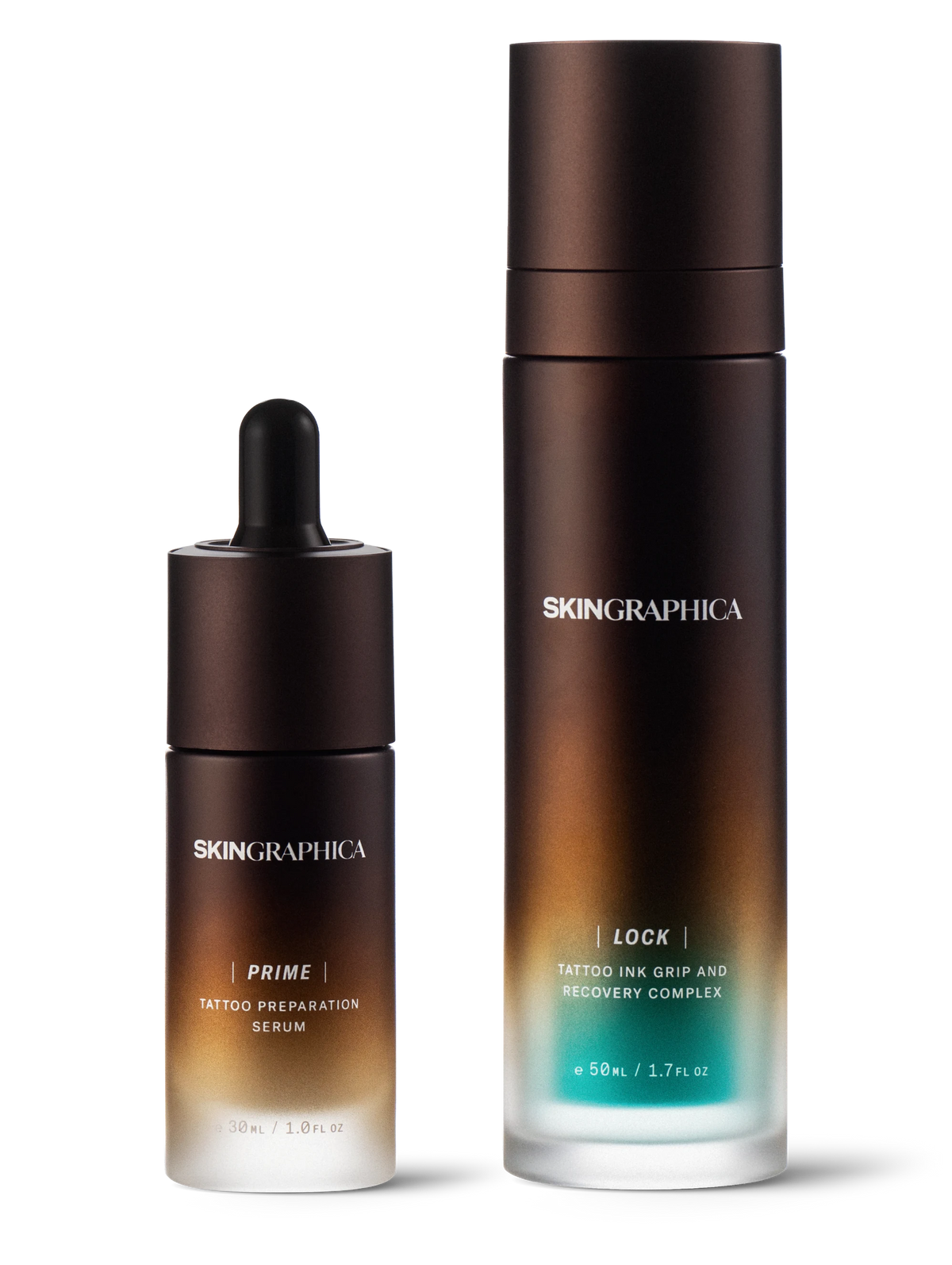
Contains PRIME and LOCK
Everything a new tattoo needs, from 21 days before your appointment to the last day of healing.
5.0 (4)1.890 krValued at 2.200 kr
Complimentary shipping over 1.350 kr. VAT and duties included.
Country/region

ICONICA · Culture
We explore how the tattoo studio has transformed into a modern sanctuary for the bereaved. Here, ink becomes a living eulogy, stitching the memory of the dead into the very fabric of the living.
ICONICA

The tattoo studio has transformed into a modern sanctuary for the bereaved, a secular confessional where the grieving come not to forget, but to remember in the most permanent, celebratory way possible.
The atmosphere inside a modern tattoo studio is distinct, yet it is no longer the intimidating realm of the rebellious fringe it was once painted to be. It is a sensory profile immediately recognisable to anyone who has spent time in the chair, but today, it carries a softer, more inviting resonance. It is a mixture of the sharp, medicinal bite of green soap, the faint metallic tang of fresh instruments and the underlying, rhythmic hum of the machine. It is a sound that sits somewhere between the purr of a contented cat and the buzz of a high-tension wire, a white noise that lulls the mind into a trance.
For decades, this environment was the domain of the outcast. But in recent years, the tattoo studio has quietly become something else entirely. It is now a modern sanctuary for the bereaved, a secular confessional, a place of warmth and safety where the grieving come not to forget, but to remember in the most permanent, celebratory way possible.
We are witnessing a profound shift in the “architecture of mourning.” The heavy wool of Victorian black armbands and the quiet, isolated stillness of the cemetery have been replaced by the bright, visceral sting of the needle and the vibrant colours of ink. We are moving away from the ephemeral nature of digital memories, where photos are trapped in clouds and voicemails are lost to server updates, and returning to the skin. The skin remains the only archive we cannot lose until we lose ourselves.
In this light, the memorial tattoo is no longer just an aesthetic choice or a fashion statement. It is a living eulogy. It is a way to stitch the memory of the dead into the very fabric of the living, turning the body into a mobile monument of love that walks, breathes and continues to experience the world.
While the modern tattoo industry often feels like a trend driven by social media algorithms, the impulse to mark the body in times of transition is as old as humanity itself. We have always been a species that cuts, paints and alters our skin to make sense of the invisible world. When we look at the history of bereavement, we see that the body has always been the primary canvas for processing grief, not as a punishment, but as a passage.
Anthropological records suggest that tattooing has been used for therapeutic and spiritual connection for over 5,000 years. The oldest preserved tattooed skin belongs to Ötzi the Iceman, a mummy discovered in the Alps, whose 61 tattoos sit largely over points later associated with acupuncture, leading some researchers to suggest they were a form of pain relief.
In ancient Egypt, tattoos were often linked to protection and the divine feminine, acting as permanent amulets to guide souls, both living and dead, through the afterlife. In Polynesia, the tatau was a rite of passage that connected the individual to their lineage, wrapping them in the story of their ancestors so they were never truly alone.
In the Victorian era, the mourning process was highly visible, albeit rigid. It involved wearing specific heavy fabrics, jewellery made from the woven hair of the deceased, and adhering to strict timelines of public sorrow. These were external signals to the community that a person was in a “liminal space”, walking between the worlds of the living and the dead. As our culture became more secular and sanitised in the 20th century, these rituals vanished. Death moved from the parlour to the hospital. Grief became something to be handled in private, quickly and quietly, often leaving the bereaved feeling isolated in their experience.
The resurgence of the memorial tattoo is a beautiful rebellion against this silence. It is a return to the idea that grief is a physical event that requires a physical marker. It is a way of wearing the “black armband” permanently, but with a crucial difference. It is often colourful, beautiful and deeply personal. By modifying the body, the griever is engaging in a rite of passage that acknowledges a fundamental truth. The person who walks out of the studio is not the same person who walked in. They have been altered by loss, and now, they are altered by ink.
To understand why a grieving person would voluntarily subject themselves to hours of sustained physical sensation, we must look beyond the art and into the neurology of trauma. Grief is often described by those in the thick of it as a kind of numbness. It is a dissociation where the world feels grey, distant and muffled. The loss of a partner, a parent or a beloved pet severs the neurological pathways of attachment, leaving the brain in a state of chaotic withdrawal.
This may be part of why the tattoo machine can feel therapeutic. Being tattooed triggers a real physiological response. As the needle works, the body releases endorphins and adrenaline, its own natural painkillers and mood lifters. For someone stuck in the numbness of grief, this sharp, rhythmic sensation can feel deeply grounding. It snaps the mind back into the present moment.
For much of the 20th century, the dominant psychological model for grief was “letting go.” However, modern research has shifted this view toward a model known as Continuing Bonds. This theory posits that we do not need to sever ties with the dead to be healthy. Instead, we adjust and renegotiate our relationship with them. We keep them with us as internalised figures who continue to offer guidance.
Memorial tattoos are perhaps the ultimate expression of Continuing Bonds. Surveys suggest around 3 in 10 American adults now have at least one tattoo, and anecdotal evidence suggests a significant portion are memorial in nature. These tattoos allow the bereaved to carry their loved ones with them physically. A daughter who tattoos her mother’s handwriting on her wrist can look down and feel that guidance daily.
One of the most isolating aspects of modern grief is the “silence of the friends.” Well-meaning friends often stop mentioning the deceased’s name, afraid that bringing it up will cause pain. A memorial tattoo breaks this silence. It serves as a visual invitation for connection. When someone sees a beautiful portrait or a unique symbol on a colleague’s arm, the natural question is, “What does your tattoo mean?”
This question is a gift. It opens the door for the griever to tell the story of their loved one. Narrative therapists suggest that telling the story of a loss can help people integrate it. By telling the story of the deceased, the griever is weaving that person’s memory into the social world, keeping them alive in the minds of others.
While grief is undeniably painful, there is a phenomenon known as Post-Traumatic Growth. This is the positive psychological change experienced as a result of the struggle with highly challenging life circumstances. Memorial tattoos are often markers of this growth. They are not just tombstones. They are totems of resilience.
Consider the story of Sarah, a teacher who lost her brother. On the second anniversary of his death, she tattooed a compass surrounded by wildflowers on her arm. “The appointment was 4 hours long,” she recalls. “It hurt, but it was a good hurt. When I walked out and saw the compass, I realised I wasn’t just leaving him behind. I was taking him with me into the future. It gave me permission to be happy again.”
In the end, the rise of the memorial tattoo tells us something hopeful about the human spirit. It tells us that we are refusing to let death be the final word. We are refusing to sanitise our grief or hide it away in the dark corners of our homes.
Instead, we are bringing our love out into the light. We are turning our bodies into living galleries of remembrance. We are asserting that love is more permanent than bone, more enduring than skin, and that as long as we draw breath, those we have lost will continue to walk the earth with us, visible, vibrant and deeply, indelibly loved. The tattoo is a rebellion against oblivion. It is a declaration that says, You were here. You mattered. And you are with me still.
The SKINGRAPHICA protocol
Ink-Safe™ care for every stage of a tattoo’s life. Shipped from Australia to more than 20 countries.
Curated system
Contains PRIME and LOCK
Everything a new tattoo needs, from 21 days before your appointment to the last day of healing.
5.0 (4)1.890 krValued at 2.200 kr
Curated system
Contains PRIME, LOCK and SHIELD
For a new piece you intend to keep sharp for life. Protection continues every day after healing.
5.0 (4)2.590 krValued at 3.150 kr
Curated system
Contains PRIME, LOCK, SHIELD and LUME
Every stage, for your next tattoo and every piece you already wear. Presented in the collector’s edition box.
5.0 (2)3.490 krValued at 4.700 kr
Continue exploring
The SKINGRAPHICA library