Ancient & Traditional Roots 12 styles
01
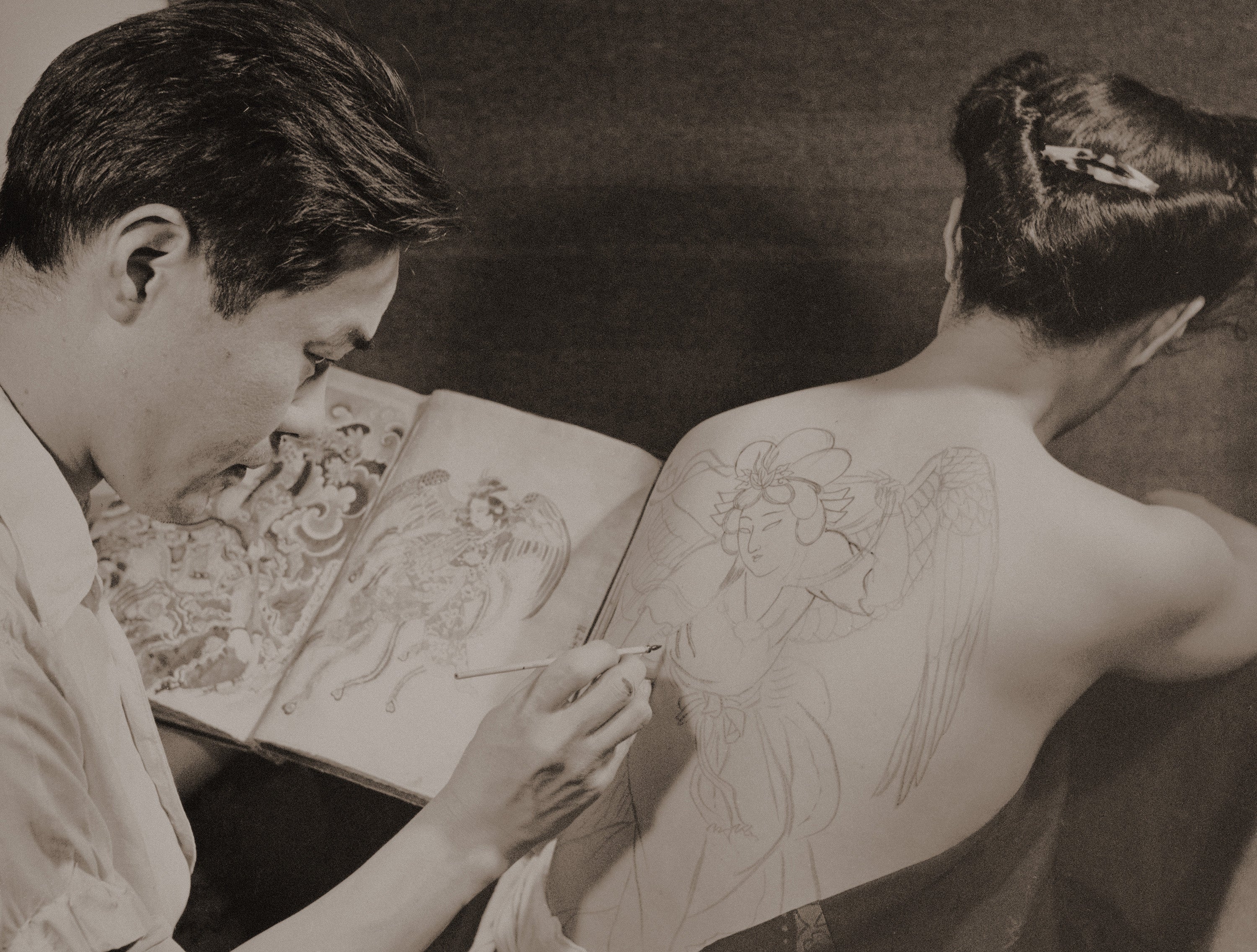
Freehand (Historic–Present)
Drawn directly on skin, flowing with body contours.
Visual features Live sketching, organic lines that track anatomy, no stencil.
Pioneers Traditional hand-tapped/hand-poked lineages worldwide.
Top artists Shige (Japan), Heng Yue (China), Hoang Minh Duc (Vietnam).
02
Tribal (Prehistoric–Present)
Sacred, bold and ancestral.
Visual features Strong black patterns, thick lines, geometric symmetry, spiritual motifs.
Pioneers Indigenous cultures in Polynesia, Africa, the Americas and Southeast Asia.
Top artists Whang-Od (Philippines), Leo Zulueta (USA), Colin Dale (Denmark).
03
Blackwork (Historic–Present)
Solid black ink as the primary language. Graphic, geometric, ritual.
Visual features Large fields of black, geometry, optical/dotwork, ornamental patterning.
Pioneers Indigenous Polynesian, Māori, Bornean, African tribal tattooists. Revived through neo-tribal in the 1980s. Leo Zulueta (USA), Alex Binnie (UK), Thomas Hooper (USA, UK).
Top artists ROXX (USA), Gerhard Wiesbeck (Germany), Nissaco (Japan).
04
Polynesian / Samoan Tatau (Ancient–Present)
Sacred genealogies encoded in pattern. Ceremony and identity.
Visual features Pe’a and malu, bands, chevrons, spearheads, rhythmic black patterns.
Pioneers The Su’a Sulu’ape family, tufuga ta tatau hereditary Samoan tattoo masters.
Top artists Su’a Sulu’ape Alaiva’a Petelo (Samoa), Su’a Sulu’ape Paulo II (New Zealand), Su’a Sulu’ape Elyesa (Germany/Samoa).
05
Tā moko (Ancient–Present)
Māori identity, whakapapa and status inscribed on skin.
Visual features Spiral/koru forms, facial moko, flowing curvilinear patterns.
Pioneers Māori tohunga Tā moko of New Zealand.
Top artists Derek Lardelli (NZ), Mark Kopua (NZ), Gordon Toi (NZ).
06
Scripture (Historic–Present)
Religious or sacred text tattooing.
Visual features Verses, liturgical passages, layout integrates typographic hierarchy and ornament.
Pioneers Ancient Egyptians, Coptic Christians (Egypt/Ethiopia, early centuries CE), Pilgrimage tattoos in Jerusalem (Medieval–Present).
Top artists Mister Cartoon (USA), Big Meas (USA), Georgios Kazakis (Germany/Greece).
07
Lettering (Historic–Present)
Words as art, language immortalised.
Visual features Typography-driven tattoos, from Chicano street culture scripts to Gothic and Victorian styles.
Pioneers Boog “Star” Deniro (USA), Mister Cartoon (USA), Jack Rudy (USA), Freddy Negrete (USA).
Top artists Sam Taylor (UK), Big Meas (USA), BJ Betts (USA).
08
Calligraphic Accents (Historic–Present)
Elegant, stylised flourishes drawn from calligraphy.
Visual features Swashes, hairlines, contrast strokes integrated around lettering.
Pioneers Chaz Bojórquez (USA), Boog “Star” Deniro (USA), Big Sleeps (USA).
Top artists Mayonaize (Australia), Big Sleeps (USA).
09
Korean Traditional (incl. Dancheong, Obangsaek Palette), (Historic–Present)
Sacred colour and symbolism drawn from Korean dancheong and obangsaek systems.
Visual features Structured ornamental patterning, bold reds, blues, greens, yellows, blacks.
Pioneers Traditional Korean decorative arts, ritual folk tattoo traditions.
Top artists Pita KKM (USA, South Korea), Cheon Moon (South Korea)
10
Xieyi Brushwork (Historic–Present)
Painterly spontaneity brought to skin.
Visual features Loose, dynamic brushstroke effects and negative-space ink-wash impressions.
Pioneers Shitao (1642–1707, China), a classical painter whose Xieyi philosophy shaped freehand ink art. Qi Baishi (1864–1957, China), one of the most famous modern Chinese painters, known for expressive brushwork.
Top artists Chen Jie (China), Lee Stewart (Germany).
11
East Asian Motifs (Historic–Present)
Traditional design elements drawn from East Asian art and symbolism.
Visual features Waves, clouds, masks, tigers, dragons, cranes and stylised flora common in East Asian visual culture.
Pioneers Ancient Chinese, Japanese and Korean art traditions applied into tattoo iconography.
Top artists Woojin “Oozy” Choi (USA, South Korea), Kubrick Ho (Taiwan), Cheon Moon (South Korea), Hoang Minh Duc (Vietnam)
12
Traditional Japanese (300 BCE–Present)
Mythology and cultural storytelling in full body works.
Visual features Dragons, koi, tigers, peonies, chrysanthemums and Hannya masks, with extensive body coverage and flowing compositions.
Pioneers Edo-period masters, Horiyoshi I.
Top artists Horiyoshi III (Japan), Shige (Japan), Dean Sacred (New Zealand), Mike Rubendall (USA).
Early Modern Tattooing 17 styles
13
American Traditional (1800s–Present)
Durable, bold, patriotic and sailor-born symbolism.
Visual features Strong black outlines and a limited colour palette (red, green, yellow, blue). Eagles, anchors, roses, pin-ups.
Pioneers Martin Hildebrandt (USA), Sailor Jerry (USA), Amund Dietzel (Norway, USA), Bert Grimm (USA).
Top artists Bert Krak (USA), Myke Chambers (USA), Samuele Briganti (Italy), Jon Vasey (UK), Rich Hardy (Australia).
14
Black & Grey Realism (1970s–Present)
Photographic skin without colour, rooted in Chicano prison and LA street styles.
Visual features Smooth gradients, portraits, religious iconography, lifelike shadows.
Pioneers Jack Rudy (USA), Freddy Negrete (USA).
Top artists Jun Cha (USA), Carlos Torres (USA), Matt Jordan (New Zealand).
15
Fine-line (1970s–Present)
Precision and subtlety using delicate linework.
Visual features Single-needle outlines, minimal shading, dainty designs, text.
Pioneers Jack Rudy (USA), Freddy Negrete (USA).
Top artists Dr. Woo (USA), Jonboy (USA), Pablo Gutierrez (UK).
16
Neo-Traditional (1980s–Present)
Evolution of American Traditional with expanded palettes and refined shading.
Visual features Detailed illustrative work, ornate borders, richer colour gradients.
Pioneers Marcus Pacheco (USA), early 1980s revivalists.
Top artists Matt Curzon (Australia), Cristian Casas (Spain), Michael Stockings (UK).
17
Biomechanical / Biomechanic (1980s–Present)
Sci-fi and anatomy fused into surreal body art.
Visual features Organic-mechanical structures, alien machinery, skeletal steel.
Pioneers H.R. Giger (visual inspiration), Guy Aitchison (USA), Aaron Cain (USA).
Top artists Stepan Negur (Russia), Paul Booth (USA), Guy Aitchison (USA)
18
Modern Japanese / Neo-Japanese (1980s–Present)
Contemporary reworking of Japanese motifs with modern palettes.
Visual features Fusion of irezumi with illustrative, graphic or experimental twists.
Pioneers Shige (Japan), Horitomo (Japan)
Top artists Shige (Japan), Gakkin (Japan), Jeff Gogué (USA).
19
New School (1990s–Present)
Playful, exaggerated rebellion in ink.
Visual features Cartoonish exaggeration, graffiti-inspired outlines, bright colour saturation, caricatures.
Pioneers Marcus Pacheco (USA), Jime Litwalk (USA).
Top artists Kelly Doty (USA), Jesse Smith (USA), Victor Chil (Spain)
20
Graffiti Style (1990s–Present)
Tattooing meets street art and graffiti.
Visual features Spray-paint textures, tags, bold lettering, vibrant colour blocks.
Pioneers Early 1990s New York graffiti-tattoo crossover artists.
Top artists Mayonaize (Australia), Kindamo (Italy), Alexey Mashkov (Russia/USA).
21
Pop Art (1990s–Present)
Bright, iconic and pop-culture driven. Tattoos inspired by comics, advertising and Warhol-like graphics.
Visual features Bold outlines, flat colour fills, high contrast, cultural references.
Pioneers Andy Warhol (art influence), Mike Giant (graffiti-to-tattoo crossover).
Top artists Ivana Belakova (USA), Alexey Mashkov (NYC), Dave Paulo (Portugal).
22
Japanese Oriental / Manga-Inspired (1990s–Present)
Japanese cultural motifs fused with manga/anime illustration.
Visual features Bright colours, stylised figures, dramatic panels, story-driven compositions.
Pioneers Early Japanese manga artists influencing tattoos, late 20th century fusion innovators.
Top artists Kubrick Ho (Taiwan), Dmitrii Naboka (Germany), Brando Chiesa (Italy), Woojin “Oozy” Choi (USA, South Korea).
23
Neo-Realism (1990s–Present)
Realism blended with illustrative or stylised artistic twists.
Visual features Lifelike imagery mixed with surreal flourishes, abstract backgrounds or painterly effects.
Pioneers Dmitriy Samohin (Ukraine), merging realism with painterly and illustrative influences.
Top artists Nick Noonan (New Zealand), Dmitriy Samohin (Ukraine).
24
Pet & Animal Portraits (1990s–Present)
Lifelike depictions of pets and animals with emotional storytelling.
Visual features Realistic fur textures, expressive eyes, natural or stylised backgrounds.
Pioneers Early realism specialists in the 1990s adapting portraiture to pets.
Top artists Evan Olin (USA), Steve Butcher (NZ), Zlata Kolomoyskaya “Goldy” (USA).
25
Wildlife (1990s–Present)
Tattoos capturing the beauty and majesty of wild animals.
Visual features Realistic detail, naturalistic environments, motion effects.
Pioneers Realism artists pushing animal portraiture into larger, lifelike works.
Top artists Evan Olin (USA), Matteo Pasqualin (Italy), Thomas Carli Jarlier (France).
26
Colour Realism (1990s–Present)
Full-spectrum realism with naturalistic depth and vibrancy.
Visual features Lifelike shading, colour blending, natural light effects.
Pioneers Nikko Hurtado (USA), Dmitriy Samohin (Ukraine).
Top artists Steve Butcher (USA), Victoria Lee (China), David Kaye (NZ), Yomico Moreno (Venezuela).
27
Portrait Realism Black & Grey (1990s–Present)
Specialised black & grey realism focused on human and animal portraiture.
Visual features Soft shading, high contrast, cinematic realism.
Pioneers Jack Rudy (USA), Freddy Negrete (USA), Charlie Cartwright (USA).
Top artists Bob Tyrell (USA), Ryan Evans (NZ), Ralf Nonnweiler (Germany).
28
Portrait Realism Colour (1990s–Present)
Full-colour portraits rendered with painterly realism.
Visual features Smooth transitions, naturalistic skin tones, depth of light and shadow.
Pioneers Nikko Hurtado (USA), Boris (Hungary), Dmitriy Samohin (Ukraine).
Top artists Steve Butcher (USA), Victoria Lee (China), David Kaye (NZ), Nikko Hurtado (USA).
29
Art Nouveau Influences (1990s–Present)
Flowing, decorative body art inspired by 19th–20th century Art Nouveau.
Visual features Curved lines, floral motifs, ornamental framing, elegance.
Pioneers Emerging tattooers adapting Art Nouveau painting traditions into skin art.
Top artists Jeff Gogué (USA), Kubrick Ho (Taiwan), Deanna James (USA)
30
Hyper-Realism (2000s–Present)
Tattoos with extreme photographic precision, often more real than reality.
Visual features Ultra-detailed textures, cinematic lighting, surreal precision.
Pioneers Dmitriy Samohin (Ukraine), Nikko Hurtado (USA).
Top artists Steve Butcher (USA), Victoria Lee (China), Sandry Riffard (France), Noah Bissi (Canada).
31
Watercolour (2000s–Present)
Tattoo as painting, ethereal and artistic.
Visual features Washes, splatters, gradients, brushstroke effects, minimal outlines.
Pioneers Ondrash (Czech Republic), Sasha Unisex (Ukraine).
Top artists Ivana Belakova (USA/Slovakia), Jie Chen (China), Sasha Unisex (Ukraine), Ondrash (Czech Republic).
32
Neo-Modern (2000s–Present)
Experimental fusion of graphic, illustrative and fine-art approaches.
Visual features Collage aesthetics, mixed media feel, negative space, unconventional layouts.
Pioneers Xoil / Loïc Lavenu (France), Peter Aurisch (Germany).
Top artists BBrung (South Korea), Dmytro Nosov (Germany), Alexander Sorsa (USA), Okan Uçkun (USA).
33
Neoclassical (2000s–Present)
Classical art motifs rendered with modern tattoo technique.
Visual features Mythic figures, marble-like shading, drapery, Greco-Roman composition.
Pioneers Emerging from European classical art traditions in 2000s studios.
Top artists Sergio Fernández (Spain), Matteo Pasqualin (Italy).
34
Surrealism (2000s–Present)
Dreamlike, reality-bending narratives.
Visual features Morphs, double-exposures, symbolic juxtapositions, painterly realism.
Pioneers Contemporary adoption led by studio movements and gallery crossovers.
Top artists Arlo DiCristina (USA), Yomico Moreno (USA), Waler Montero (USA).
35
Dark Surrealism (2000s–Present)
Macabre surrealism with gothic overtones.
Visual features Demonic figures, occult symbols, heavy black and grey, textured depth.
Pioneers Paul Booth (USA) and the Last Rites circle.
Top artists Paul Booth (USA), Neon Judas (Germany), Victor Portugal (Poland), Sandry Riffard (France).
36
Pop Surrealism (2000s–Present)
Lowbrow meets surrealism, pop-culture infused.
Visual features Glossy outlines, bold colour blocks, cartoon-esque iconography.
Pioneers Emerging from the Lowbrow/Pop Surrealist art movement of the 1990s–2000s, later adapted into tattoo culture by experimental studios.
Top artists Eden Kozokaro / Kozo (USA), Brando Chiesa (Italy), Alexey Mashkov (USA).
37
Abstract Tattoos (2000s–Present)
Pure abstraction on skin.
Visual features Gestural marks, textures, non-figurative compositions, graphic fields.
Pioneers European graphic-art crossovers popularised in the 2000s.
Top artists Timur Lysenko (Poland), Matteo Nangeroni (Italy).
38
Polygonal Abstract (2000s–Present)
Faceted, geometry-driven imagery.
Visual features Broken planes, angular colour blocks, cubist influences.
Pioneers Emerging from digital graphic design and cubist-inspired tattoo experiments in the 2000s.
Top artists Polyc SJ (South Korea), Jesse Rix (USA)
39
Trash Polka (2000s–Present)
High-contrast collage of realism and graphic chaos.
Visual features Photoreal elements, bold black shapes, signature red accents, splashes and type.
Pioneers Volko Merschky (Germany), Simone Pfaff (Germany), Buena Vista Tattoo Club (Germany).
Top artists Timur Lysenko (Poland), Neon Judas (Germany), Volko Merschky (Germany), Simone Pfaff (Germany).
40
Abstract Realism (2000s–Present)
Realistic subjects fused with abstract structures.
Visual features Portraits emerging from painterly textures, fractures, light beams and geometry.
Pioneers Guy Aitchison (USA), Francis Bacon (UK).
Top artists Thomas Carli Jarlier (France), Matteo Pasqualin (Italy), Sandry Riffard (France)
41
Conceptual Realism (2000s–Present)
Realism fused with symbolic or abstract storytelling.
Visual features Realistic portraits/figures combined with metaphors, surreal compositions or broken environments.
Pioneers Dmitriy Samohin (Ukraine), Matteo Pasqualin (Italy).
Top artists Andrea Pellerone (Italy), Matteo Pasqualin (Italy), Thomas Carli Jarlier (France).
42
Painterly Realism (2000s–Present)
Realism executed with brushstroke-inspired techniques.
Visual features Visible painterly textures, strokes resembling oil or acrylic paintings.
Pioneers Nikko Hurtado (USA), Dmitriy Samohin (Ukraine).
Top artists Deanna James (USA), Edit Ben Gida (Israel), David Benjamin Kaye (New Zealand).
43
Painterly / Fine Art Integration (2000s–Present)
Tattoos mimicking museum-quality fine art styles.
Visual features Oil-paint textures, layered glazing, impressionist colour blends.
Pioneers Dmitriy Samohin (Ukraine), Paul Acker (USA).
Top artists Deanna James (USA), Jie Chen (China), Eden Kozokaro “Kozo” (USA).
44
Oriental Colour Realism (2000s–Present)
Realism fused with East Asian cultural motifs.
Visual features Dragons, masks, cranes, koi, with high-saturation realism techniques.
Pioneers Shige (Japan), Hori Yen (USA).
Top artists Shige (Japan), Jeff Gogué (USA), Victoria Lee (China).
45
Japanese Inspired Realism (2000s–Present)
Blends Japanese aesthetics with Western realism.
Visual features Realistic shading with waves, koi, masks, mythological figures.
Pioneers Ed Hardy (USA), Jeff Gogué (USA).
Top artists Jeff Gogué (USA), Chris Mata’afa (Australia), Nick Noonan (New Zealand).
46
Contemporary Japanese (2000s–Present)
Updated Japanese style with Western influence and modern colour palettes.
Visual features Traditional motifs with abstract backgrounds, layered gradients, illustrative flourishes.
Pioneers Horitomo (Japan), Gakkin (Japan).
Top artists Nissaco (Japan), Gakkin (Netherlands/Japan).
47
Illustration / Illustrative (2000s–Present)
Tattoos resembling sketches, comics or hand-drawn art.
Visual features Visible outlines, shading like pencil or ink, sketchbook energy.
Pioneers Inspired by engraving, printmaking and comic art traditions.
Top artists Kelly Doty (USA), Jie Chen (China), Sasha Unisex (Ukraine).
48
Dark Art (2000s–Present)
Gothic, macabre imagery in tattoos.
Visual features Skulls, demons, shadows, occult themes, heavy contrast.
Pioneers Paul Booth (USA), Robert Hernandez (Spain).
Top artists Paul Booth (USA), Robert Hernandez (Spain), Victor Portugal (Poland).
49
Horror (2000s–Present)
Tattoos inspired by horror cinema and literature.
Visual features Monsters, gore, haunting realism, film still recreations.
Pioneers Bob Tyrrell (USA), Paul Acker (USA), Paul Booth (USA), Robert Hernandez (Spain).
Top artists Bob Tyrrell (USA), Sandry Riffard (France), Paul Acker (USA).
50
Fantasy (2000s–Present)
Mythical worlds and characters tattooed in vivid realism or stylised forms.
Visual features Dragons, elves, cosmic landscapes, video game and movie inspirations.
Pioneers Boris Vallejo influence (art crossover), tattoo adoption in 2000s Europe/USA.
Top artists Paul Booth (USA), Yomico Moreno (USA), Sandry Riffard (France).
51
Micro-Realism (1990s–Present, Flourished 2010s)
Tiny realism with extreme detail.
Visual features Miniature portraits, landscapes and icons no larger than a coin.
Pioneers Jack Rudy (USA), Freddy Negrete (USA).
Top artists Oscar Åkermo (USA), Goldy Zlata (USA), Ganga (USA).
52
Opaque Grey Realism (2010s–Present)
Softer realism through dense grey washes.
Visual features Smooth shading, muted tones, reduced contrast.
Pioneers Thomas Carli Jarlier’s “Noire Ink” style.
Top artists Thomas Carli Jarlier (France), Sergio Fernández (Spain).
53
Silverwash Realism (2010s–Present)
Metallic grey tones, shimmering depth.
Visual features Subtle silver gradients, glossy sheen.
Pioneers Emerging among realism artists in the 2010s.
Top artists Chris Showstoppr (Australia), Ganga (USA).
54
Dotwork / Stippling (2010s–Present)
Patterns and shading via dots.
Visual features Gradients, mandalas, sacred geometry.
Pioneers Xed LeHead (UK), expanded by European blackwork circles.
Top artists Dimitry Troshin (USA), Dillon Forte (USA), Coen Mitchell (New Zealand).
55
Etching / Engraving (2010s–Present)
Tattoos mimicking old-world printmaking.
Visual features Cross-hatching, fine parallel lines, vintage illustration look.
Pioneers European woodcutting masters like Albrecht Dürer (Germany) and Gustave Doré (France), whose engraving and cross-hatching influenced tattooing.
Top artists Marco C. Matarese (Italy), Daniel Gulliver (UK), Maxime (France)
56
Linework (2010s–Present)
Pure outlines as design.
Visual features Bold linear forms, no shading.
Pioneers Rooted in early tribal and traditional tattooing and revived by modern minimalists.
Top artists Tritoan Ly (New Zealand), Okan Uçkun (Turkey/USA), Pablo Gutierrez (UK).
57
Geometric Blackwork (2010s–Present)
Precision geometry in solid black.
Visual features Symmetry, tessellations, mandalas.
Pioneers Rooted in sacred geometry traditions found in Hindu yantras, Buddhist mandalas and Islamic mosaics (dating back centuries).
Top artists Lewis Black (Portugal), Dillon Forte (USA), Chaim Machlev (Germany/USA).
58
Graphic Blackwork (2010s–Present)
Bold, abstract black fills.
Visual features Heavy contrast, graphic modernism, negative space.
Pioneers Rooted in printmaking and woodcut traditions.
Top artists Gakkin (Japan/Netherlands), Matteo Nangeroni (Italy), Timur Lysenko (Poland).
59
Mandala (2010s–Present)
Sacred symmetry in tattoo form.
Visual features Circular, detailed, meditative geometry.
Pioneers Spread from dotwork artists in early 2010s, e.g., Xed LeHead.
Top artists Dillon Forte (USA), Aleksandra Dovgal (USA), Lewis Black (Portugal)
60
Ornamental (2010s–Present)
Decorative, jewellery-inspired patterns.
Visual features Filigree, lace, baroque motifs.
Pioneers Grew from European ornamental revival.
Top artists Ryan Ashley (USA), Carlos Torres (USA), Léah Blum (France).
61
Ornamental Jewellery Design (2010s–Present)
Tattoos mimicking luxury jewellery and adornment.
Visual features Chains, filigree, gemstones, lace-like embellishments.
Pioneers 2010s rise in ornamental fine-line traditions influenced by Middle Eastern, Indian henna and European lacework.
Top artists Ryan Ashley DiCristina (USA), Coen Mitchell (New Zealand), Léah Blum (France).
62
Dark Ornamental (2010s–Present)
Gothic and moody twist on ornamental patterns.
Visual features Heavy black shading, filigree blended with skulls, occult motifs.
Pioneers Developed by European blackwork movements in the early 2010s.
Top artists Cristian Casas (Spain), Gakkin (Netherlands/Japan), Matteo Nangeroni (Italy), Nissaco (Japan).
63
Mosaic Geometric (2010s–Present)
Tattoos resembling tiled mosaics with geometric precision.
Visual features Tessellations, repeating patterns, stained-glass effects.
Pioneers Inspired by Islamic, Byzantine and Mediterranean mosaics reinterpreted in tattoo form.
Top artists Coen Mitchell (New Zealand), Dillon Forte (USA).
64
Botanical / Floral Design (2010s–Present)
Tattoos inspired by flora and natural elements.
Visual features Roses, peonies, foliage, delicate colour or black & grey.
Pioneers Rooted in traditional botanical illustration, modernised in 2010s tattoo realism.
Top artists Aleksandra Dovgal (Russia), Phil Garcia (USA), Tritoan Ly (New Zealand)
65
Colour Illustration (2010s–Present)
Vibrant illustrative tattoos echoing painting and drawing.
Visual features Bold outlines, layered shading, painterly palettes.
Pioneers Emerging from crossover between comic book art and illustrative tattooing.
Top artists Victor Chil (Spain), Kelly Doty (USA), Duda Lozano (Brazil).
66
Realistic Pop Art (2010s–Present)
Fuses realism with pop culture imagery and bright pop-art style.
Visual features Comic book shading, vivid blocks of colour, famous icons.
Pioneers Emerging in late 2000s–2010s as realism merged with Warhol-inspired design.
Top artists Dave Paulo (Portugal), Luka Lajoie (Canada), Alexey Mashkov (USA).
67
Gothic / Anime Style (2010s–Present)
Dark fantasy merged with anime aesthetics.
Visual features High-contrast characters, horror-anime hybrids, gothic iconography.
Pioneers Grew out of Japanese anime fandom merging with gothic subculture.
Top artists Brando Chiesa (Italy), Castlebasas (Germany).
68
Cyborg Style (2010s–Present)
Futuristic tattoos blending human anatomy with mechanical cybernetics.
Visual features Circuitry, cybernetic limbs, sci-fi fusion of skin and machine.
Pioneers Guy Aitchison (USA), laid groundwork via extension of Biomechanical work into cyberpunk-inspired tattoos.
Top artists Heng Yue (China), Paul Booth (USA), Guy Aitchison (USA).
69
Minimal Tattoo (2010s–Present)
Stripped-down, small-scale tattoos with clean lines.
Visual features Tiny text, minimal shapes, discreet symbols.
Pioneers Global rise in minimalism in design and tattoo studios in the 2010s.
Top artists JonBoy (USA), Mr.K (USA), Okan Uçkun (USA).
70
Minimalism (2010s–Present)
Broader minimal philosophy applied to tattoos.
Visual features Sparse use of line, negative space, geometric reduction.
Pioneers Adopted from 20th-century minimal art movement into tattoo culture.
Top artists Okan Uçkun (Turkey), Sasha Masiuk (Ukraine), Mr. K (USA)
71
Conceptual / Abstract Integrations (2010s–Present)
Tattoos as ideas, blending concept with execution.
Visual features Symbolic overlays, surreal distortions, visual metaphors.
Pioneers Emerging from the late 2000s realism movement, shaped by artists like Victor Portugal (Poland), Matteo Pasqualin (Italy) and Timur Lysenko (Poland)
Top artists Matteo Pasqualin (Italy), Timur Lysenko (Poland), Victor Portugal (Poland).
72
Embroidery / Patch Style (2010s–Present)
Tattoos designed to mimic stitched fabric.
Visual features Thread textures, patch borders, faux 3D embroidery.
Pioneers Eduardo “Duda” Lozano (Brazil), credited with bringing embroidery tattoos to global attention.
Top artists Duda Lozano (Brazil).
73
Stone Texture (2010s–Present)
Skin as stone, carving tattoo into sculpture.
Visual features Cracks, chisel marks, statuesque shading.
Pioneers Hoang Minh Duc (Vietnam) mastered Black & Grey Realism with stone texture effects.
Top artists Hoang Minh Duc (Vietnam), Chris Mata’afa (Australia)
74
Blue Ink “Ceramic Skin” (2010s–Present)
Tattoos using unique blue tonal palettes with porcelain-like depth.
Visual features Gradient blues, smooth reflective “ceramic” finishes.
Pioneers Woojin “Oozy” Choi (USA, South Korea), popularised this innovative blue-ink style.
Top artists Woojin “Oozy” Choi (USA, South Korea), Dongkyu “Q” Lee (USA).
75
Anime Design (2010s–Present)
Tattoos inspired by Japanese anime & manga.
Visual features Bold colour, anime characters, cel-shaded scenes.
Pioneers Rooted in Japanese manga and anime illustrators from the 20th century.
Top artists Brando Chiesa (Italy)
76
Custom Script (2010s–Present)
Hand-drawn lettering as tattoo art.
Visual features Unique typefaces, personal calligraphy.
Pioneers Boog “Star” Deniro (USA), Big Sleeps (USA).
Top artists Mr. K (USA), Sam Taylor (Australia), Big Sleeps (USA).
77
Victorian/Hollow Lettering (2010s–Present)
Ornate historical script revived for modern tattooing.
Visual features Hollow characters, decorative flourishes, vintage typography.
Pioneers Sutherland Macdonald (UK), George Burchett (UK).
Top artists Sam Taylor (Australia), Benjamin Laukis (Greece).
2020s Cutting Edge 7 styles
78
Textured Jade Design (2020s–Present)
Tattoos inspired by jade carvings and mineral textures.
Visual features Glossy green gradients, cracked or polished jade effects.
Pioneers Lifo (South Korea), brought jade-inspired textures into tattoo realism.
Top artists Lifo (South Korea).
79
Chrome Realism (2020s–Present)
Futuristic realism reflecting metallic, chrome surfaces.
Visual features Hyper-polished highlights, mirror reflections.
Pioneers Nico Del Grosso (USA) and new-school realists in the 2020s.
Top artists Nico Del Grosso (USA).
80
Neon / Glow Style (2020s–Present)
Tattoos mimicking neon signage and glowing lights.
Visual features Bright fluorescents, glow effects, luminous outlines.
Pioneers Michael Stockings (UK) popularised bold neon colour styles.
Top artists Michael Stockings (UK), Brando Chiesa (Italy).
81
Pastel Gore (2020s–Present)
Contrasting cute pastel colours with gory or violent imagery.
Visual features Candy tones, kawaii horror, shocking juxtapositions.
Pioneers Brando Chiesa (Italy), credited with defining pastel gore tattooing.
Top artists Brando Chiesa (Italy).
82
Cybersigilism (2020s–Present)
Cyberpunk meets spiritual glyphs.
Visual features Futuristic scripts, symmetrical patterns, abstract coding aesthetics.
Pioneers Rooted in Tribal and Blackwork foundations by Leo Zulueta (USA) and Xed LeHead (UK), later evolving into digital sigil aesthetics.
Top artists Brando Chiesa (Italy), DanyKim (France), Chainsmaiden (Germany).
83
Magic Ink (2024–Present)
Invisible tattoos revealed under UV/blacklight.
Visual features Barely visible in daylight, glowing under UV.
Pioneers Keith “Bang Bang” McCurdy (USA) launched “Invisible Ink” in 2024.
Top artists Keith “Bang Bang” McCurdy (USA), experimental UV ink specialists worldwide.
84
White-On-Black (2020–Present)
White ink designs placed over a solid black (blackout) foundation to create high-contrast, “negative-light” imagery.
Visual features Crisp white lines and saturation over dense black fields, strong contrast and intentional skin breaks/spacing used to keep the design readable. The white typically settles into a softer, smoky / ghost-shadow look compared to the fresh result.
Pioneers A late-2010s-2020s evolution growing directly out of the blackout/coverup movement (using blackout as a base, then layering white designs on top as a second phase).
Top artists Rudy Dziara (Poland), Cody Philpott (Canada), Ivan Hack (Russia).
Nothing matches that search.Clear the search and filters