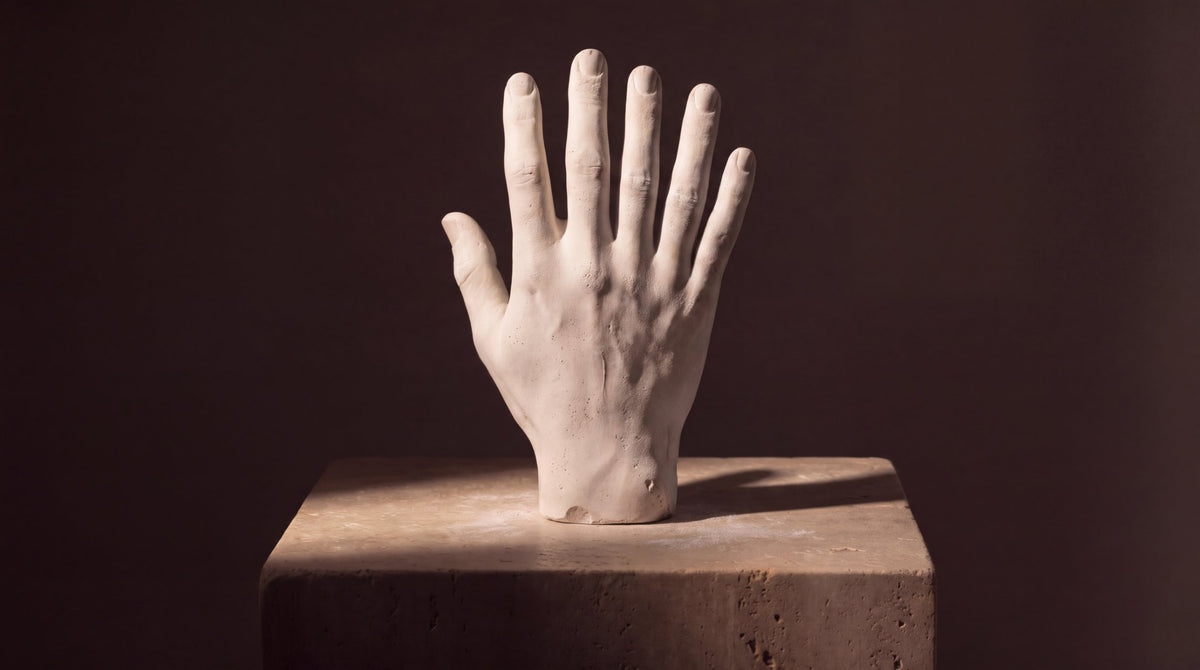
Among the AI tattoo designs that Australian artists showed the ABC this year was one for a hand. The image showed the artwork in place. The hand had 6 fingers.
It was not a one-off. Adelaide artist Courtnii Shore told the ABC in August 2026 that about 1 in 4 enquiries at her studio now arrive with an AI image attached. At another studio the figure was closer to 3 in 4. Some of the enquiries read as if a chatbot wrote them too.
The machine has arrived in tattooing, and it has arrived at both ends. One kind of machine draws the design. Another kind is learning to put it in your skin. Neither is going away. The question worth asking is what each one is good for, and what it will never be.
The designCan AI design a tattoo?
It can design a picture of a tattoo. That is a different job.
An image generator is trained to make a flat image look convincing on a screen. A tattoo is a drawing that has to live in skin for 40 years. Skin is not paper. Ink spreads a little under the surface as the years pass, so lines thicken and tiny gaps close. A forearm is a cylinder. A shoulder moves. A design that looks razor sharp at full screen size can turn to a grey smudge at 6 centimetres on a wrist.
Artists who spoke to the ABC and to Dazed describe the same faults again and again. Detail packed so tightly it cannot be tattooed at the size the client wants. Lettering with spelling mistakes nobody caught. Shading that ignores how ink settles and ages. And a sameness, because the same few words typed into the same few tools give thousands of people a cousin of the same wolf.
| What matters | An AI image | A design drawn for skin |
|---|---|---|
| Made for | A flat screen | One body and one placement |
| Detail | As much as a screen can hold | Only what will still read in 20 years |
| Lettering | Often misspelt | Checked by a person |
| Originality | Thousands of near copies | Drawn once |
| Ownership | Probably nobody, under US law | It has an author |
There is a quieter cost too. A generated image looks finished. It sets an expectation that no needle can meet, and it invites the client to argue with the one person in the room who knows why.
The studioWill a tattoo artist tattoo an AI design?
Some will. Most good ones will not copy it line for line.
The split is fairly consistent. Brighton artist Hannah Reynolds told Dazed she will take an AI image as a starting point and redraw it. London artist Klaudia Kempa said she would never tattoo one, partly because the image may draw on other artists’ work. In Australia, the vice president of the Professional Tattooing Association, Brenton Eldridge, called AI “a fantastic tool” for mocking up ideas, while warning that it knows nothing about skin.
Read those 3 positions together and the etiquette is clear. Bring an AI image as a mood, not a blueprint. Say that it is AI. Then let the artist draw it for your body. If a studio agrees to trace a generated image exactly as it stands, treat that as information about the studio.
The lawWho owns an AI tattoo design?
In the United States, probably nobody.
On 2 March 2026 the Supreme Court declined to hear Thaler v. Perlmutter, the long-running attempt to register copyright in an image made entirely by an AI system. That left the lower court ruling in place. Copyright protects works of human creation. An image produced by a machine with no real human authorship cannot be registered. Work where a person keeps creative control can be, and the Copyright Office says it has registered hundreds of those.
For a collector that has a plain consequence. If a tool generated your design and nobody redrew it, you may hold no rights in it, and neither does anyone else. The same image, or its twin, is free to turn up on a stranger’s arm. A drawing made by your artist is a different object. It has an author. This is general information and not legal advice, and the law differs by country. There is more on tattoos and the courts in The Gavel and the Needle.
The robotCan a robot tattoo you?
Yes. It is already happening in New York.
Blackdot, a company from Austin, Texas, founded by former tattoo artist Joel Pennington, builds a machine it calls AERO. It reads the skin with computer vision and lays the tattoo down as thousands of separate dots, each about the width of a human hair. A human artist supplies the design and supervises. The company says clients rate the pain at about 2 out of 10. It has tattooed paying clients, and it has been in use at Bang Bang, one of the best known studios in New York.
It is not cheap and it is not everywhere. Each machine costs about 120,000 US dollars to build. When Blackdot opened in Austin in 2023, a piece by the generative artist Tyler Hobbs was listed at 8,000 dollars for the design and 1,850 for the session, in greyscale only. When Pennington took the idea to Shark Tank and asked for 1.5 million dollars for 5 per cent of the company, all 5 investors passed.
Take the claims at face value and the robot is still solving the easy half of the problem. Putting dots exactly where a file says to put them is an engineering task. Deciding where they should go on this body, at this size, for this person, is the craft.
The handWhy the human hand just became the luxury
In the 1970s the quartz movement made watches more accurate and far cheaper than anything a watchmaker could build by hand. The trade expected to die. Instead the mechanical watch became a luxury. Once precision was free, people paid for the hand.
Tattooing is about to run the same experiment. When anyone can generate a flawless image in 10 seconds, the image is worth very little. What holds its value is everything a machine cannot supply. A drawing made for one body. A style that took 20 years to arrive at. A name. A waiting list. The knowledge that a particular person stood over you for 9 hours and meant every line.
The artists in Black Ivy, the Global Top 10, and GRAPHICA, the Global Top 100, are not the ones with anything to fear. People cross the world and wait years for them because their work cannot be prompted. The pressure lands in the middle, on work that was already interchangeable. A machine can do interchangeable. It is very good at it.
That is the disruption, and it is a useful one. It asks every collector a blunt question before they book.
Do you want a picture, or do you want a tattoo by someone?
The etiquetteHow to use AI well before a tattoo
- Use it to find words. If you cannot describe what you want, a few generated images can help you point at it.
- Bring the mood, not the blueprint. Show the feeling, the subject and the placement, then hand the drawing to your artist.
- Tell your artist it is AI. They will work it out in seconds anyway.
- Expect it to be redrawn. Simpler, bolder and larger is usually the fix, and it is the reason the tattoo will still read in 20 years.
- Check every letter and count every finger. The machine will not.
- Choose the artist before the image. Their portfolio tells you more about your tattoo than any prompt will.
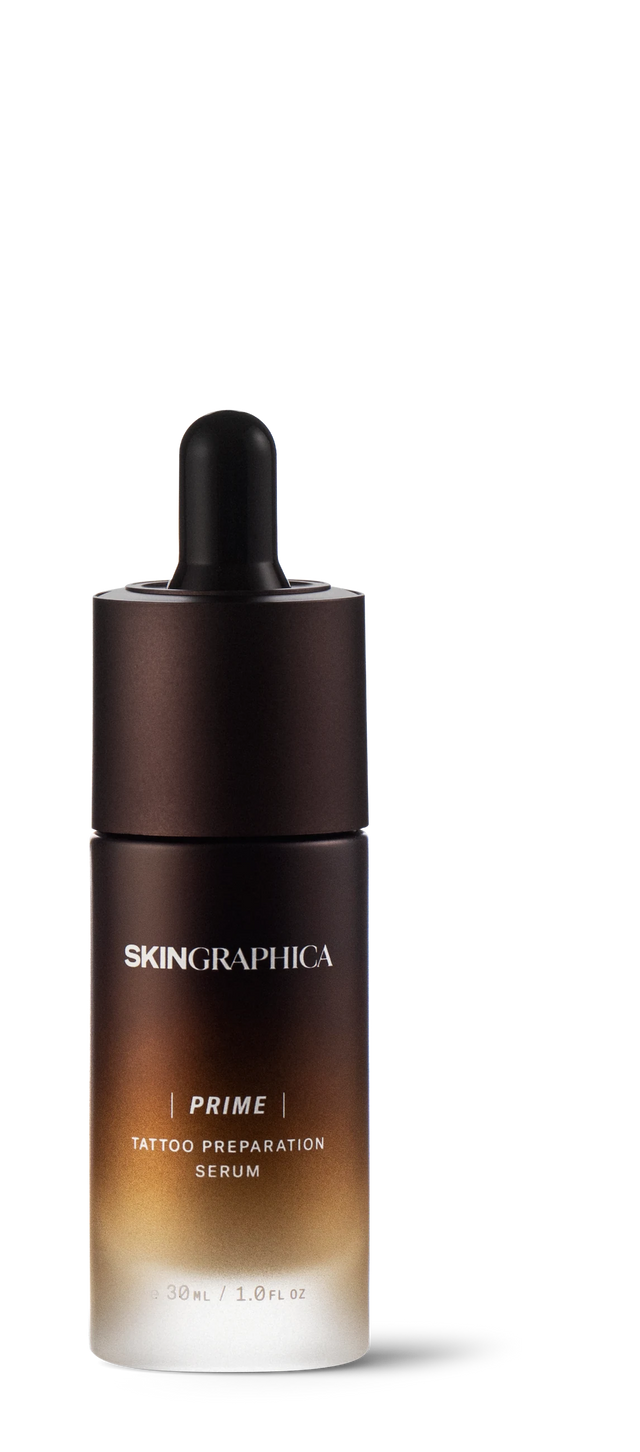
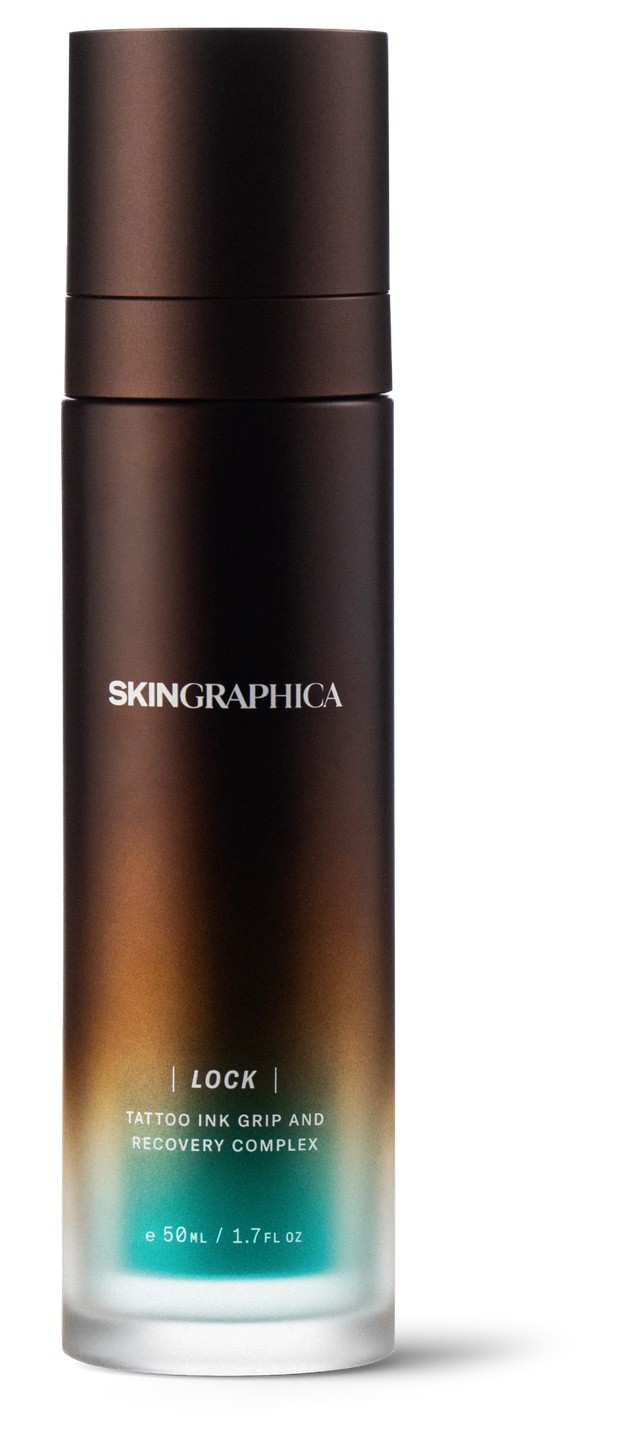
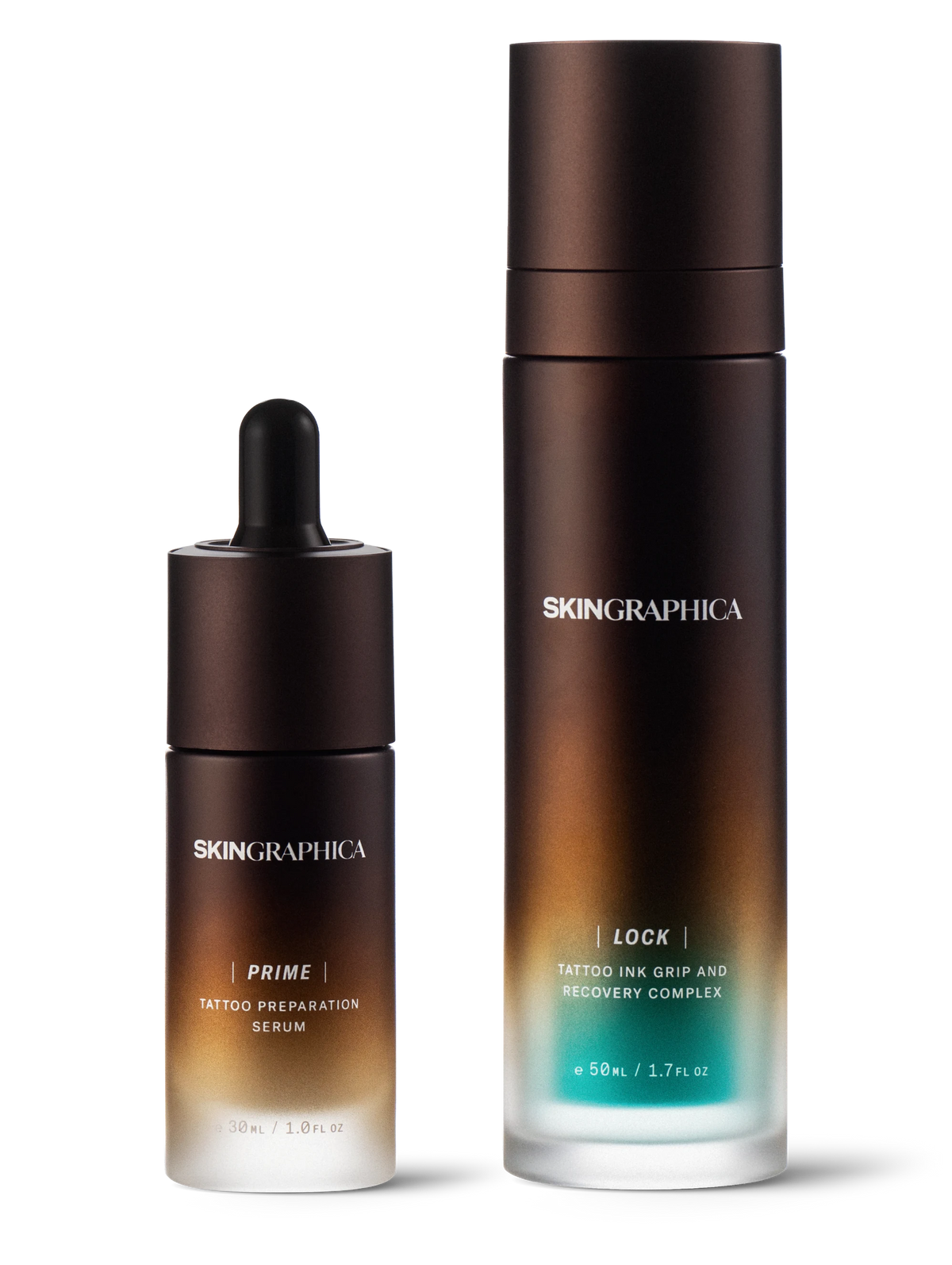
Whoever draws it, the work is only as good as the skin it sits in. Start PRIME 21 days before the appointment to prepare the canvas, then look after the first 14 days of recovery with LOCK.
QuestionsAI and tattoos, answered
Can AI design a tattoo?
It can produce an image in seconds, but it designs for a screen and not for skin. Most AI designs need to be redrawn by an artist before they will work as a tattoo.
Will tattoo artists accept AI designs?
Many will accept one as a reference and redraw it. Few respected artists will copy one exactly, and some refuse them outright.
Who owns the copyright in an AI tattoo design?
In the United States an image made entirely by AI cannot be registered for copyright, so nobody may own it. A design drawn by a human artist has an author.
Is there a robot that does tattoos?
Yes. Blackdot’s AERO machine applies tattoos as tiny dots under an artist’s supervision and is in use at a studio in New York.
Will AI replace tattoo artists?
Not the good ones. Machines make generic work cheap, which makes original work by a known hand more valuable.
Use the machine for ideas and a person for the tattoo.
AI is a useful way to find words for what you want. It cannot design for skin, it cannot own what it makes and it cannot be the reason a tattoo matters. Choose the artist first.
Reporting from ABC News, Dazed, Morgan Lewis, Axios and RoboPhil. This article is general information, not legal advice. Prices and company details are as reported on the dates given.