In September 1991, 2 hikers crossing a ridge in the Ötztal Alps saw a body in the melting ice. They took him for a mountaineer lost a few seasons earlier. He had been dead for about 5,300 years.
We know almost nothing about him. Not his name, not his language, not what he believed would happen to a man who dies alone on a mountain with an arrowhead in his shoulder. Every word he ever spoke is gone. What we have instead, in remarkable detail, is his tattoos. There are 61 of them. Short black lines and small crosses on the wrist, the lower legs, the lower back and the chest, pushed into the skin a point at a time. Everything else he decided has dissolved. Those stayed.
It is worth holding that picture in mind, because we are living at the far end of the same experiment.
Consider how little of an ordinary day is final. A message can be unsent. A photograph can be retaken until the face in it agrees with us, then corrected afterwards. The shoes go back within 30 days. Films, music and software are no longer owned but rented by the month, under a button that says cancel anytime. A job is a chapter. A city is a phase. A relationship can end with the movement of a thumb. Even the body has become a draft. Noses, hairlines and waistlines are open to revision, and lately there is an injection for appetite itself.
None of this is a complaint. Reversibility is one of the great comforts of the age. It is kind to the young, forgiving of error and very good for business. But it carries a cost that nobody prices in. A choice that can be undone asks very little of the person making it. We have built a world of enormous freedom and almost no weight.
Into that world, in rising numbers, people walk into a studio, sit down and ask to be marked for life.
In 2023 the Pew Research Center put the question to 8,480 American adults. 32% had at least one tattoo. 22% had more than one. Among people aged 30 to 49, the mortgage and school run years, it was 46%. These are not the numbers of a subculture. They are the numbers of a mainstream that has gone looking for something.
Pew also asked why, and the answer is the interesting part. It was not fashion and it was not rebellion. 69% said they did it to honour or remember someone or something. In a culture that has made forgetting effortless, the most common reason for a tattoo is the wish that one thing should stay.
This has always been the business of people whose lives would not hold still. Sailors, who owned nothing that could not go overboard, wore their voyages on their arms. So did soldiers, prisoners and pilgrims. So, less famously, did kings. In 1881 a 16 year old naval cadet called Prince George, serving aboard HMS Bacchante, was tattooed in Japan with a tiger. His elder brother chose a crane. George recorded in his diary that the needle did not hurt. He went on to become George V, and for nearly 26 years the British Empire was ruled by a man with a tiger under his uniform that no court, parliament or mother could remove.
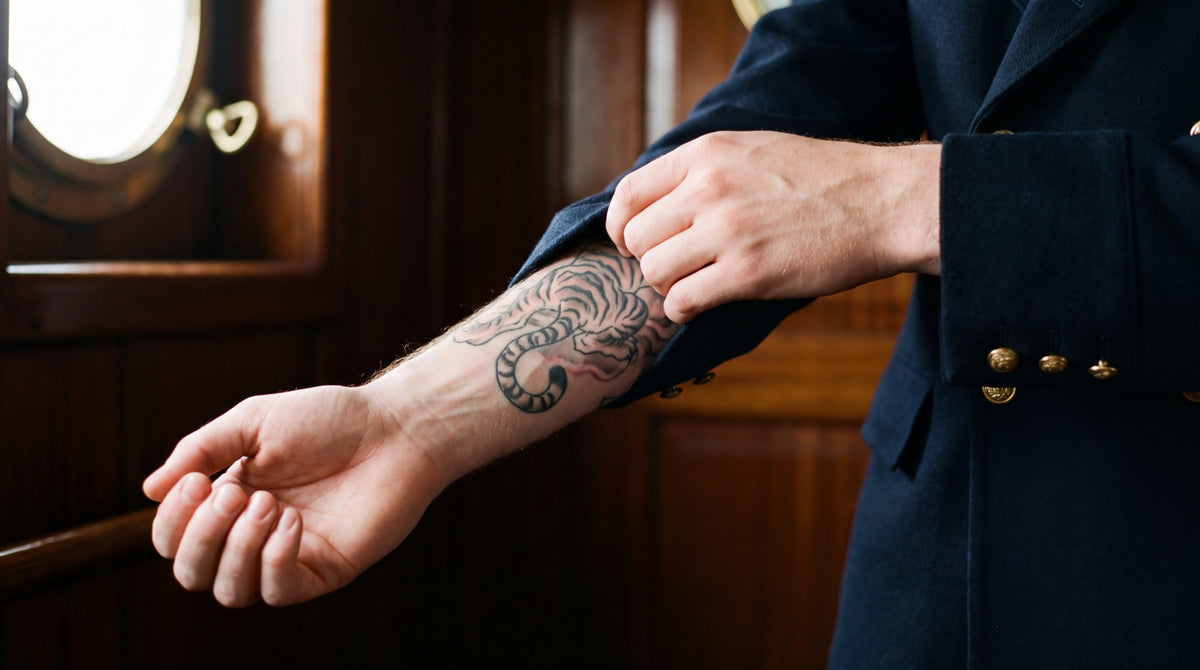
The appeal for the prince and the deckhand was the same. A tattoo is the one possession that cannot be confiscated, pawned or left on a train.
Permanence casts a shadow, and its name is regret. In the same survey, 24% of tattooed adults said they regretted at least one of theirs. The figure is usually quoted as a warning. It reads better the other way round. Roughly 3 in 4 people who made an irreversible decision about their own body, often young and often in an afternoon, would not take it back. Few of the lasting choices people make would survive that question so well.
Regret is not the flaw in the idea. It is the proof of it. A laser can now take a tattoo off, slowly, expensively and, by most accounts, with more pain than it took to put on. It seldom returns the skin exactly as it was. The exit exists and the exit is hard, which is the point. A tattoo you could delete with a tap would be a sticker. The meaning comes from the stakes, in the way that a promise means something only because breaking it costs you.
Here is something the luxury trade, which believes it understands desire, has not quite noticed. Everything else it sells is, in the end, an asset. The watch, the handbag, the painting and the car each have a resale value, an auction record and a market. Each can be flipped. A large piece by one of the finest tattoo artists alive can cost as much as a serious watch, take longer to obtain and hurt a good deal more. It is worth exactly nothing to anyone else on earth. It cannot be sold, stolen, left to a child or divided in a divorce. It is the only luxury with no second owner.
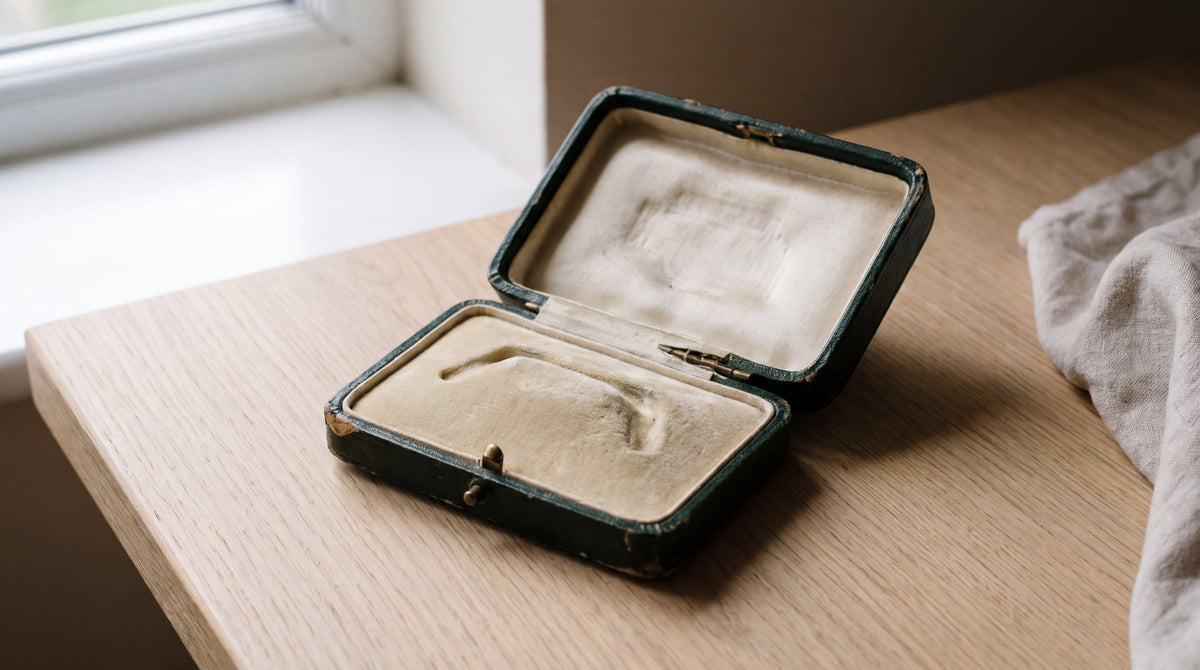
That makes it priceless in the strict sense, which is to say worthless, which is to say entirely yours.
And unlike the watch in the safe, it goes on living. It softens. It moves when you move, fades where the sun finds it and settles as the skin settles. People who have worn their work for decades tend to speak of it the way others speak of a house they have lived in for a long time. It has stopped being a picture. It is simply where they are. Looking after it, with daily protection from the sun and the occasional restoration, is not vanity. It is the ordinary care you give to anything you intend to keep.
Which returns us to the man in the ice. He carried a copper axe, the most advanced object of his age and almost certainly the most valuable thing he owned. It now sits in a museum in Bolzano, separated from him by a sheet of glass. His tattoos are still his.
Nearly everything we make today is built to be replaced, and nearly everything we say is kept on machines that belong to somebody else. The tattoo is a small refusal of all that. It is a decision made once, in ink, by a person who understood that it could not be taken back and went ahead anyway. In an age that has put an undo button on everything else, that may be the most radical thing left that an ordinary person can do before lunch.
Figures from the Pew Research Center survey of 8,480 US adults, July 2023. The royal tattoos are recorded by the Royal Collection Trust. The account of the Iceman’s tattoos follows research published in the European Journal of Archaeology in 2024.