ICONICA

The Purposeful Hurt Why Tattoo Pain Matters
A decade of psychological research from Australian universities suggests something strange about the pain of a tattoo session. It is not the price of the image. It is the mechanism by which the image becomes meaningful.
The most revealing moment in a tattoo session is not the first line, or the final colour pass, or the mirror held up at the end. It is a small, almost invisible instant, maybe forty minutes in, when the needle is still working and the client's face shifts. The shoulders drop. The breath slows. The eyes, which had been darting around the studio, fix somewhere quiet and internal. Something has settled.
Good tattoo artists know this moment. They call it the turn, or the drop, or, less poetically, "they're in it now." It is the moment when the pain stops being an obstacle to the outcome and becomes part of it. The client is no longer enduring the process. They are undergoing it.
For a long time, this was dismissed as a quirk. Masochism. Adrenaline. The particular strangeness of the tattoo subculture. But a body of psychological research, much of it developed over the past decade at Australian universities, suggests something different.
The pain, it turns out, is doing real work.
The Bastian Experiments
In 2014, a team led by Associate Professor Brock Bastian, then at the University of New South Wales and now at the Melbourne School of Psychological Sciences, published a paper in Psychological Science with a disarmingly plain title. Pain as Social Glue: Shared Pain Increases Cooperation.
The experiment was simple to the point of being clever. Bastian and his colleagues divided undergraduate participants into small groups and had some of them perform mildly painful tasks together, submerging hands in ice water, holding difficult leg squats, and in a third trial, eating a whole bird's eye chilli. Other groups performed comparable but painless tasks. Afterwards, every group played an economic cooperation game.
The groups that had shared pain cooperated measurably more. They reported feeling closer to their fellow participants. They were more willing to sacrifice individual reward for the good of the group. The pain had done something a pleasant shared experience could not. It had bonded the strangers.
In a follow-up review published later that same year in Personality and Social Psychology Review, titled The Positive Consequences of Pain, Bastian and co-authors pulled together the wider evidence. Across dozens of studies, chosen pain was associated with three consistent effects. It heightened sensory pleasure that followed it. It increased self-regulation and the experience of meaning. And it deepened social affiliation and group belonging.
Pain, under the right conditions, does not diminish an experience. It concentrates it. Bastian, Jetten & Hornsey, 2014
What This Has to Do With a Tattoo
The tattoo is one of the few practices left in secular Western life where an adult chooses a controlled, purposeful, hours-long painful experience in exchange for a permanent symbolic outcome. Nothing else in the modern city really works like it. Marathons come close. Childbirth, for those who experience it, comes closer. But the tattoo is uniquely voluntary, uniquely repeatable, and uniquely designed to leave a visible trace.
If Bastian's research is right, and there is now a decade of replication suggesting it is, then the pain of a tattoo session is not a bug in the experience. It is a feature. It is the mechanism by which the meaning of the image gets welded to the body carrying it.
Consider the neurochemistry. From the moment the needle touches skin, the nervous system begins to flood with the body's two great internal painkillers. Adrenaline, first, sharpening focus and dilating attention. Endorphins, next, binding to the same opioid receptors as morphine and producing what long-distance runners know as the high. For the duration of the session, the body is quietly medicating itself with a cocktail it cannot obtain any other way. This is the source of the euphoria that tattoo artists see on their clients' faces in hour three. It is also the source of what is colloquially called "tattoo addiction," which is not a medical diagnosis but a genuine observation: people who experience the state once, often want to experience it again.
But the chemistry is only half the story. The other half is cognitive.
The Meaning Machine
Behavioural economists have known for fifty years that human beings ascribe more value to things they have worked harder for. The effect is called effort justification. The shorthand version, borrowed from furniture assembly, is the IKEA Effect. A bookshelf you built yourself feels more valuable than an identical bookshelf you bought pre-assembled, even if the one you built is slightly wonky.
Pain is effort in its purest, most undiluted form. When a person sits for four hours while a needle punctures their skin three thousand times a minute, they are paying, not in money but in discomfort, for the image they will carry afterwards. And the brain, which does not like unrewarded suffering, quietly raises the psychological value of the outcome to match the cost that was paid for it.
This is why a tattoo of a memorial date that took six painful hours feels different from a sticker of the same date on a laptop. The image is the same. The cost was not. And the body, which keeps scrupulous account of what it has endured, assigns more meaning to the mark that cost more to carry.
The Social Side
There is a final dimension to the research, and it is the one that explains why tattoo culture has always been, stubbornly, a culture rather than a mere practice.
Bastian's work on pain as social glue suggests that when people share painful experiences, even with strangers, their sense of group belonging strengthens. This is part of why military units form the bonds they do, why religious rituals across every human culture involve voluntary discomfort, why fraternity hazings and marathon finish lines produce the specific tearfulness they produce. The body, having suffered alongside others, registers those others as kin.
The tattoo studio, though it looks nothing like a temple or a parade ground, operates on the same principle. The client, the artist, and often a friend sitting in the corner for support, are engaged in a shared ordeal with a symbolic outcome. When it ends, everyone present has participated in the making of a mark that will outlive them. This is why tattoos so often produce lifelong loyalty to the artist who made them. It is not gratitude for the design alone. It is something quieter and older than gratitude.
Why This Reframes Aftercare
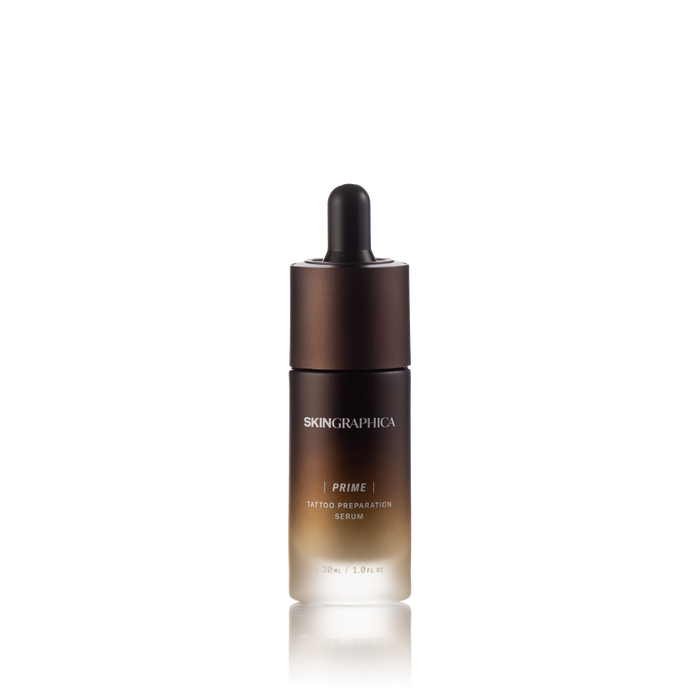
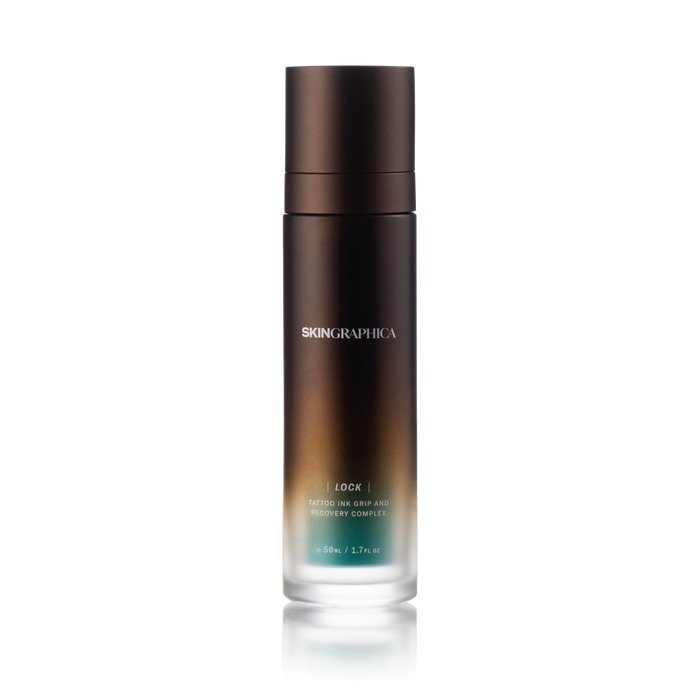
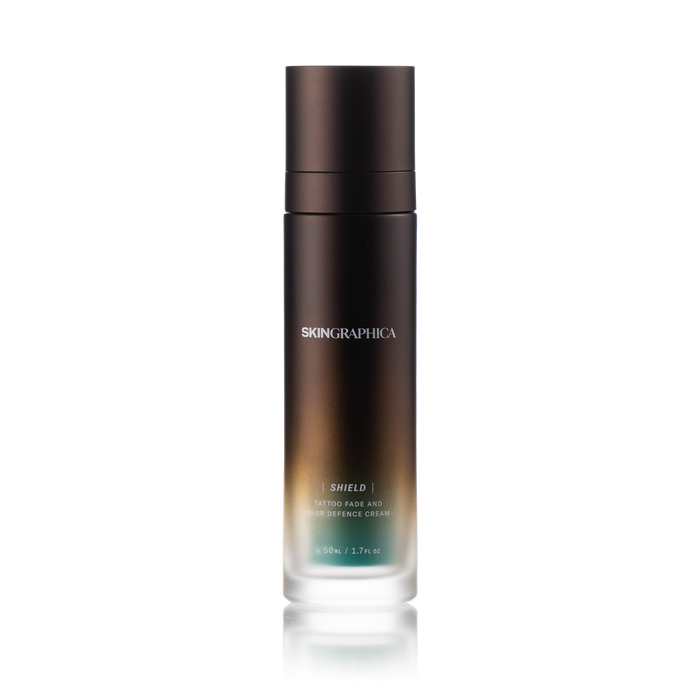
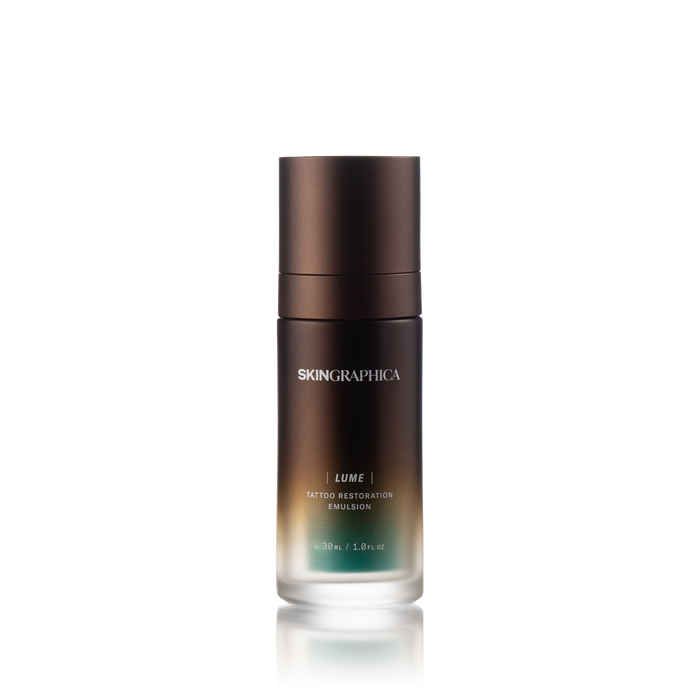
There is a practical consequence to all of this, and it is the reason SKINGRAPHICA exists in the form it does.
If the pain of the tattoo is not an incidental cost but part of the meaning itself, then the care of the tattoo is not a cosmetic afterthought. It is the continuation of a ritual that began the moment the needle touched the skin. The days following a session are when the body consolidates the physical memory and the symbolic one together. To treat those days with a tube of nappy cream is to miss the point of what just happened.
Good aftercare is not maintenance. It is respect for the cost that was paid.
The Quiet Argument
None of the research reviewed here is an argument that pain is good, or that suffering should be sought for its own sake, or that the tattoo is a superior ritual to the many others human beings have devised. It is simply an argument that when pain is chosen, carried willingly, and attached to a symbolic outcome, it produces something the painless version of the same act cannot.
The image you carry on your skin is not only the image. It is the image plus the four hours you sat for it, plus the breath you learned to slow, plus the minor heroism of staying in the chair when you wanted to leave, plus the quiet bond you formed with the person holding the machine, plus the small private knowledge that you endured it and came out the other side with a permanent record of having done so.
Whatever the image says, the pain says this too. It says: this mattered enough to hurt for.
Which is why, when people look at their own tattoos late at night, long after the session is a memory, what they are looking at is rarely just an image.
They are looking at a receipt.